If you have spent any time looking at North Devon gardens, you will have noticed a pattern. The ones that look the most put together, and the ones that stay that way through a wet Devon winter, tend to share a common feature: structured raised beds built from timber sleepers. From cottage plots in Bishops Tawton to coastal gardens above Woolacombe, raised sleeper beds bring order to difficult ground and give planting a proper foundation to thrive in.
But a sleeper bed that lasts is not just a case of stacking timber and filling it with soil. The timber choice, the base preparation, the drainage, and the planting all matter. Get them right and you have a feature that looks better every year. Get them wrong and you are looking at bowed walls, rotted wood, and dead plants within three winters. This guide walks through the decisions that make the difference, with North Devon conditions firmly in mind.
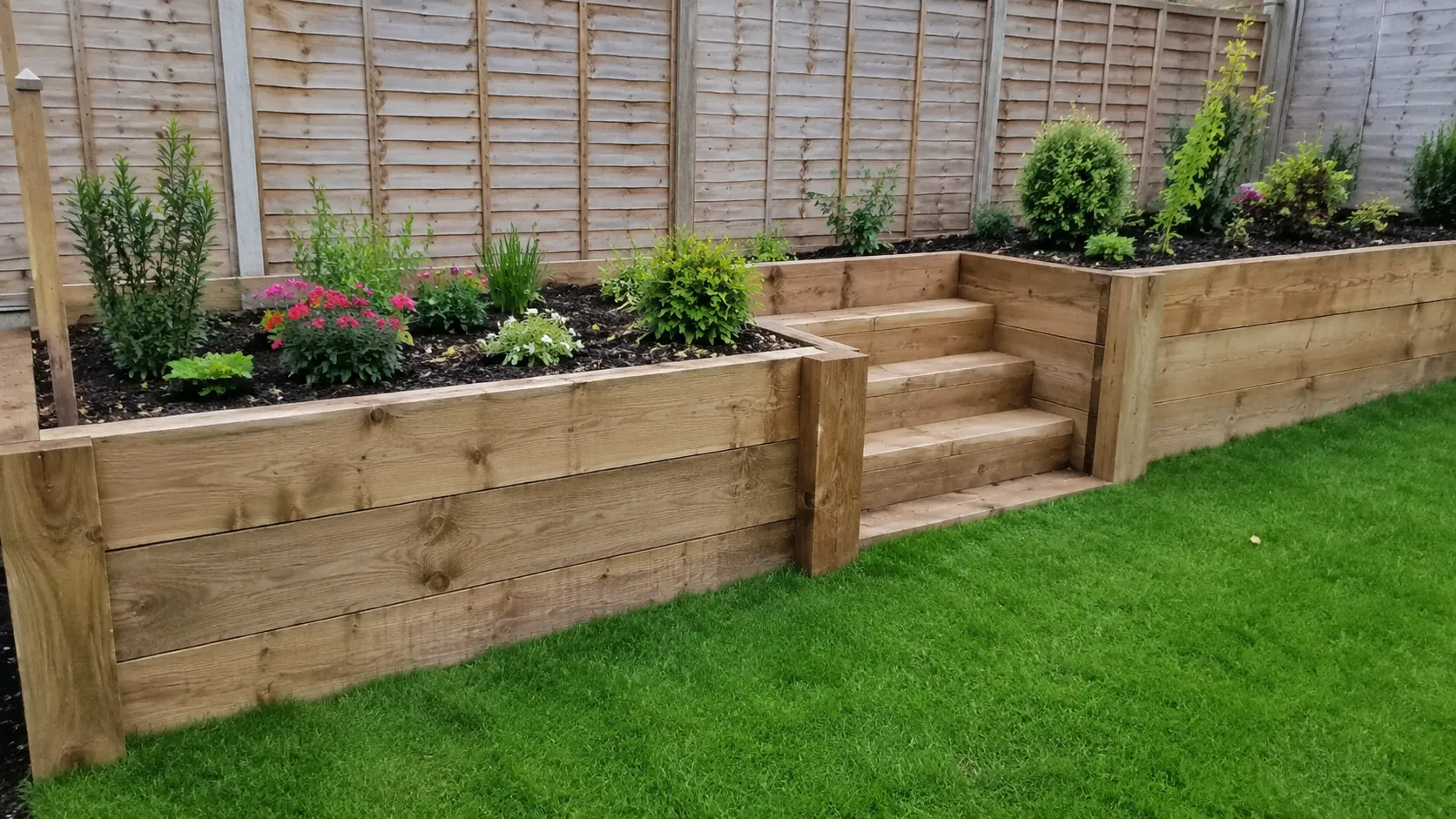
Why Raised Sleeper Beds Suit North Devon Gardens
The soil across Barnstaple, Bideford, and the surrounding area is a mixed bag. Heavy clay dominates in the valleys, thin topsoil sits over shale on the hills, and coastal plots around Croyde and Saunton are sandy and fast draining. None of these are ideal for growing much beyond grass and brambles without serious improvement.
A raised bed solves that problem in one move. Instead of fighting the soil you have, you build a contained structure and fill it with the soil your plants actually want. That alone transforms what you can grow, but the benefits do not stop there.
Better drainage in wet winters. North Devon gets around 1,000mm of rain a year, and a bed sitting at ground level in heavy clay will be waterlogged for months on end. A raised bed lifts the root zone above the wet ground, and a drainage layer at the base lets excess water escape rather than pooling around the roots.
Warmer soil, earlier planting. Soil in a raised bed warms up faster in spring because it is exposed to the sun on all sides and drains more freely. That means you can sow and plant a couple of weeks earlier than you would in open ground, a real advantage in a short Devon growing season.
Easier to work. A 40 centimetre high bed saves your back when sowing, weeding, and harvesting. For anyone with a kitchen garden or a productive plot, this is the single biggest reason to go raised.
Defines the garden. Crisp timber edges give structure to an otherwise informal space, separating planting from lawn and path without the maintenance burden of a hedge.
Choosing the Right Sleeper Timber
The timber you choose determines how the bed looks, how long it lasts, and what it costs. There are three realistic options for North Devon gardens, each with its own trade offs.
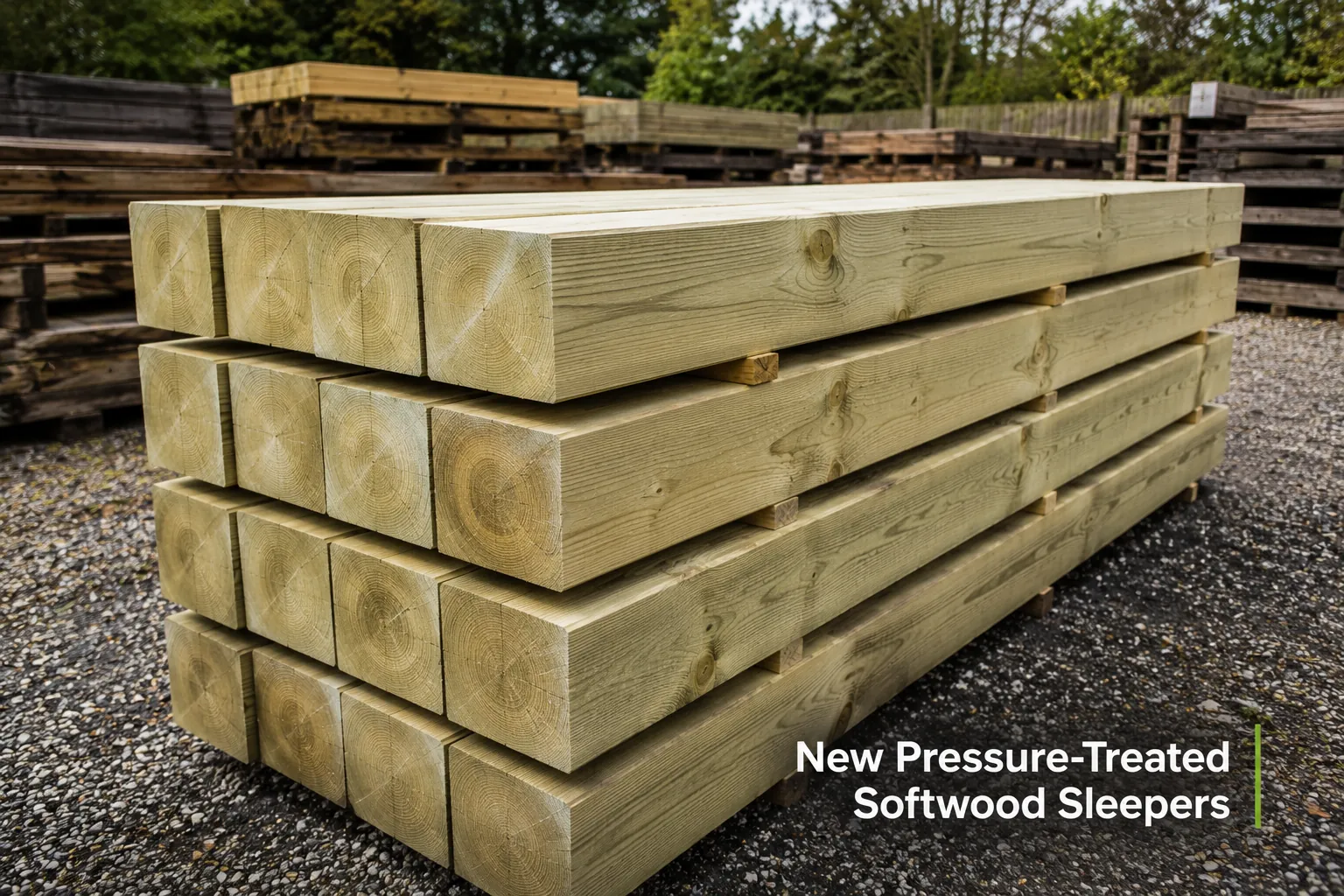
New Pressure-Treated Softwood Sleepers
The workhorse of modern raised beds. Scandinavian redwood sleepers are clean, straight, uniform, and easy to cut on site. Treated to Use Class 4 for direct ground contact, they give 15 years or more of service when properly lined and kept off wet soil. They are the most cost effective option and the sensible choice for kitchen gardens, family plots, and anywhere you want a neat, contemporary look.
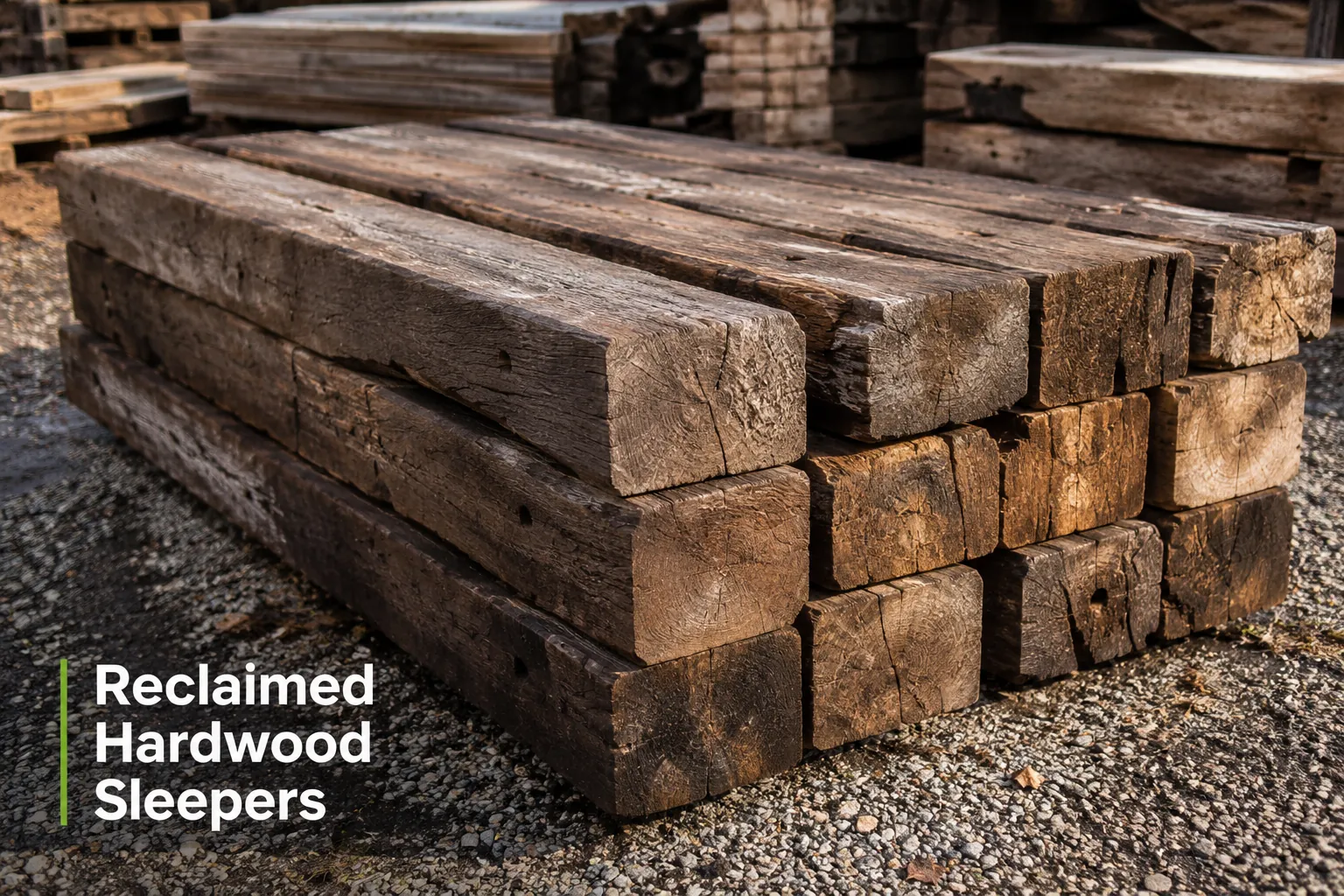
Reclaimed Hardwood Sleepers
Genuine ex-network railway sleepers in jarrah or greenheart. These are dense tropical hardwoods that shrug off moisture and rot for 25 to 40 years with no chemical treatment at all. They carry a weathered, characterful look that suits older Barnstaple properties and rural Devon gardens, and they are heavy enough to stay put without any fixings in a low bed. They cost more and are harder to source, but they are the longest lasting option by some margin.
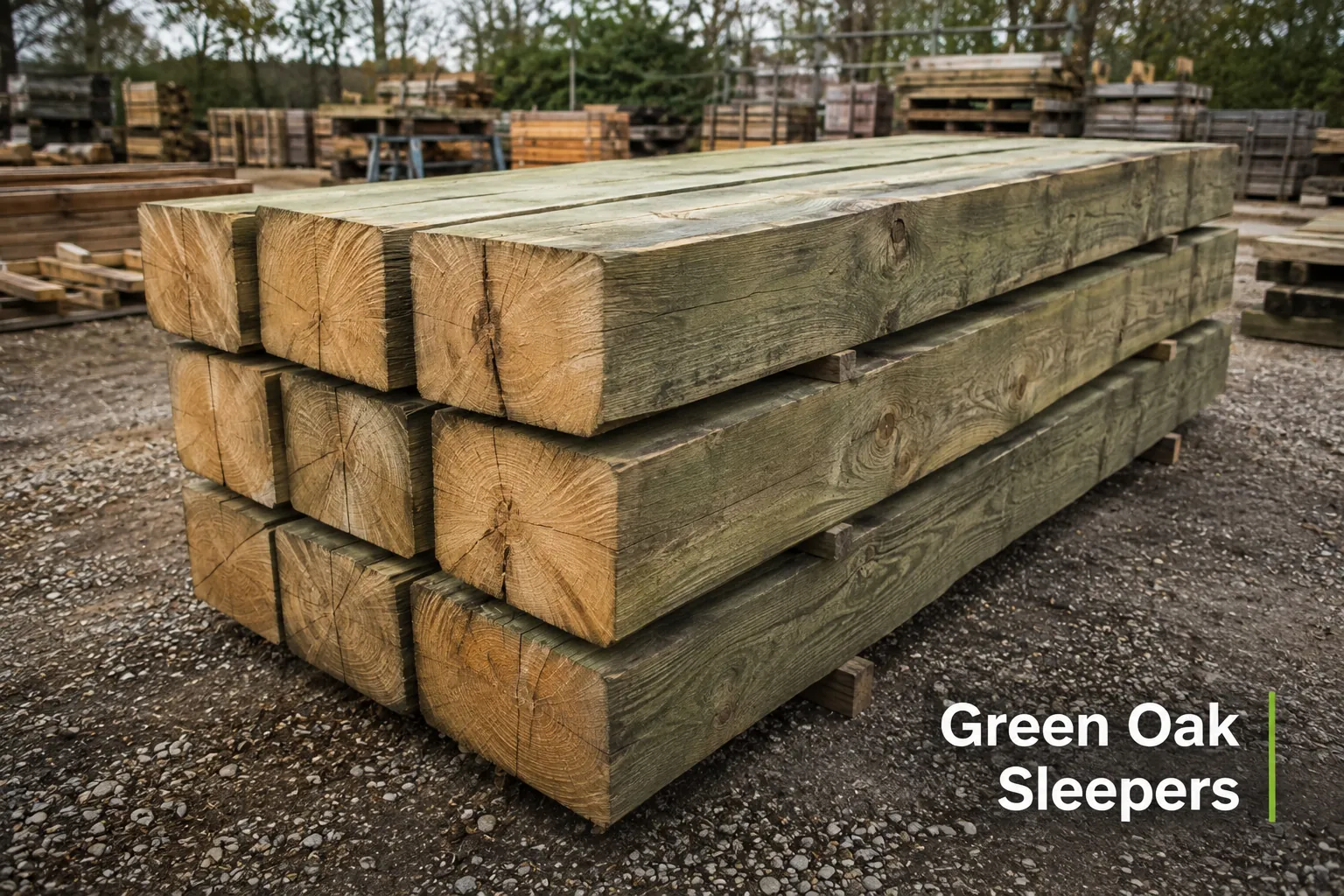
Green Oak Sleepers
Fresh sawn English oak weathers to a soft silver-grey and lasts 20 to 30 years in contact with the ground, with no treatment needed. The premium choice for period properties and country gardens around South Molton and Lynton, where the warm tones of new oak complement stone and brick. Green oak sits between softwood and reclaimed hardwood on both cost and longevity, and it looks better as it ages.
Building a Sleeper Bed That Stays Put
The difference between a raised bed that lasts twenty years and one that starts to fail in three is almost entirely in the build. Here is what matters, and what gets skipped by people who do not do this for a living.
Base Preparation
A sleeper bed laid straight onto soil will sink unevenly within a couple of winters as the ground settles and the wet soil beneath softens. The base needs to be levelled and compacted first. On a sloping site, that means digging the high side into the bank so the first course sits on level ground, or stepping the bed in sections to follow the contour. Where the ground is particularly soft, the base course should be set into a shallow trench with a layer of compacted hard-core beneath.
Lining the Inside
Timber in constant contact with wet soil rots from the inside out, and that is the failure you do not see until the bed collapses. The inside of every bed should be lined with a permeable membrane, typically a heavy duty geotextile, which keeps the soil off the wood while still letting excess moisture escape. It is cheap, it takes ten minutes per bed, and it adds years to the life of the timber.
Drainage Layer
A bed filled straight with topsoil will compact over time and drain poorly. A 50 to 75 millimetre layer of clean rubble or gravel at the bottom of the bed, above the membrane, creates a drainage zone that stops the bed becoming a waterlogged trough over a Devon winter. On heavy clay soils this is not optional, it is essential.
Fixing the Sleepers Together
Sleepers are heavy, and a few nails will not hold them together for long. Each course should be fixed to the one below with proper timber connectors, threaded bar, or rebated joints depending on the design. A single skin bed only needs corner connectors, but a bed over two sleepers high, or one holding back a bank of soil, needs through-bolts or a tied-back design to stop the walls bowing outward under the weight of wet soil.
Soil: The Bit Most People Get Wrong
A raised bed is only as good as what you fill it with, and filling it with whatever soil was dug out of the hole is the most common mistake. That heavy Barnstaple clay, tipped into a raised bed, is still heavy clay. It will compact, crack in summer, and sit waterlogged in winter, which defeats the whole point of raising the bed.
A good raised bed soil mix is roughly one third topsoil, one third compost or well rotted manure, and one third horticultural grit or sharp sand. That gives you a free draining, fertile, workable soil that roots can actually push through. For ericaceous planting such as rhododendrons, camellias, or blueberries, swap the topsoil for an ericaceous compost and keep the grit for drainage.
Fill the bed to about 5 centimetres below the top of the sleepers. That leaves room for a mulch layer and means water does not run straight over the edge when it rains.
Planting Schemes That Thrive in North Devon
The right planting makes a sleeper bed look intentional rather than functional. The wrong planting limps through its first winter and never recovers. The key is choosing species that suit the site, the soil, and the amount of attention you are willing to give them.
For a Sunny South Facing Bed
Lavender, rosemary, and salvia for drought tolerant structure that loves the free draining soil and needs almost no maintenance once established. Nepeta and erysimum for long flowering colour from late spring through to autumn. Ornamental grasses such as stipa and miscanthus for movement and winter interest. These all thrive in the warmer, drier conditions a south facing raised bed provides.
For a Shady North Facing Bed
Hostas and ferns for lush foliage, provided you are willing to keep on top of slugs. Heuchera and tiarella for ground cover colour that performs in shade. Hellebores for winter and early spring flowers when little else is happening in the garden. Pulmonaria and brunnera for early season colour and attractive foliage through the year.
For a Productive Kitchen Garden
Salads and herbs in the spring and autumn shoulders of the season, when the raised bed's warmer soil gives you a head start. Beans, peas, and brassicas through the summer. Root vegetables such as carrots and parsnips, which struggle in heavy clay but thrive in the free draining soil of a properly filled raised bed. A 40 centimetre high bed is deep enough for almost any vegetable.
For Year Round Structure
Box or yew for evergreen edging and low hedging within the bed. Acer palmatum as a slow growing focal point that suits the sheltered conditions a raised bed provides. Viburnum and sarcococca for winter scent and evergreen backdrop. These give the bed a framework so it looks good even when the seasonal planting has died back.
Planning Permission: Do You Need It?
For the vast majority of domestic raised beds in North Devon, no. Raised beds for planting are classed as permitted development provided they do not exceed two metres in height anywhere within one metre of a boundary, or 2.5 metres elsewhere on the property.
The situations where you do need to check are:
- Retaining walls holding back a significant bank of soil, which are treated differently from a planting bed and may need building regulations sign off.
- Any structure close to a listed building or within a conservation area, where different rules apply and you should speak to North Devon Council first.
- Beds that double as seating or raised patio edges, where the height and position may push them outside the permitted development limits.
If in doubt, a quick call to the planning department saves a lot of hassle. Most raised beds we install around Barnstaple sit well within the limits and need no permission at all.
Maintenance: Keeping Your Sleeper Beds Sound
A properly built sleeper bed is low maintenance, not no maintenance. A few simple jobs keep it looking good and extend its life considerably.
Check the timber annually. Walk around the bed each spring and look for soft spots, splits, or any movement in the walls. Catching a problem early, such as a connector working loose or a section starting to bow, is a ten minute fix. Leaving it until the wall fails is a full rebuild.
Re-treat softwood every three to four years. A quality wood preservative applied on a dry day keeps the timber protected. Hardwood and oak do not need this, but a coat of decking oil every few years keeps them looking fresh.
Top up the mulch each spring. A 5 centimetre layer of bark or compost suppresses weeds, holds moisture in the soil, and breaks down over the season to feed the bed. It also makes the bed look finished and cared for.
Refresh the soil every few years. Raised beds settle and lose volume over time as the organic matter breaks down. Top up with a mix of compost and topsoil every two to three years to keep the bed full and the soil fertile.
Getting It Built Properly
A raised sleeper bed is one of those jobs where the difference between a good one and a bad one does not show up for a few years. The sleepers might look fine on day one, but if the base was not levelled, the inside was not lined, or the courses were fixed with a handful of nails, the bed will bow, sink, and rot far sooner than it should.
If you are planning raised beds in Barnstaple, Bideford, Ilfracombe, or anywhere across North Devon, and you want them built to last, it is worth talking to someone who does this regularly. We install sleeper beds and planting schemes alongside our fencing and decking work, with proper base preparation, membrane lining, drainage, and heavy duty connectors holding everything together.
Find out more about our sleeper beds and planting service in Barnstaple

About Nathan
Nathan has spent more than 10 years installing fences, decks, sleeper beds, and garden structures across North Devon. He takes a practical, detail-first approach to every project, using materials that are properly specified for the coastal weather around Barnstaple, Bideford, and Ilfracombe.
Learn more about NathanPlanning Raised Beds in North Devon?
Whether you want a single kitchen garden bed or a full terraced planting scheme on a sloping plot, we can help. Get in touch for a free site visit and a fixed written quote.
Call 01271 626340 or contact us online to arrange a consultation.
Serving Barnstaple, Bideford, Ilfracombe, South Molton, and surrounding North Devon areas with professional sleeper bed installation and garden planting built to last.