A pergola is one of the most rewarding additions you can make to a North Devon garden. It gives you shade on hot summer afternoons, a frame for climbing plants, and a proper focal point for outdoor seating areas. But before you start picturing evening meals under the rafters, it pays to understand the rules around pergola planning permission in Barnstaple and the wider North Devon area.
The good news is that most domestic pergolas don't need planning permission at all. The not-so-good news is that the exceptions catch people out, particularly in conservation areas and on listed properties. This guide walks you through what's permitted, what isn't, and how to stay on the right side of North Devon Council.
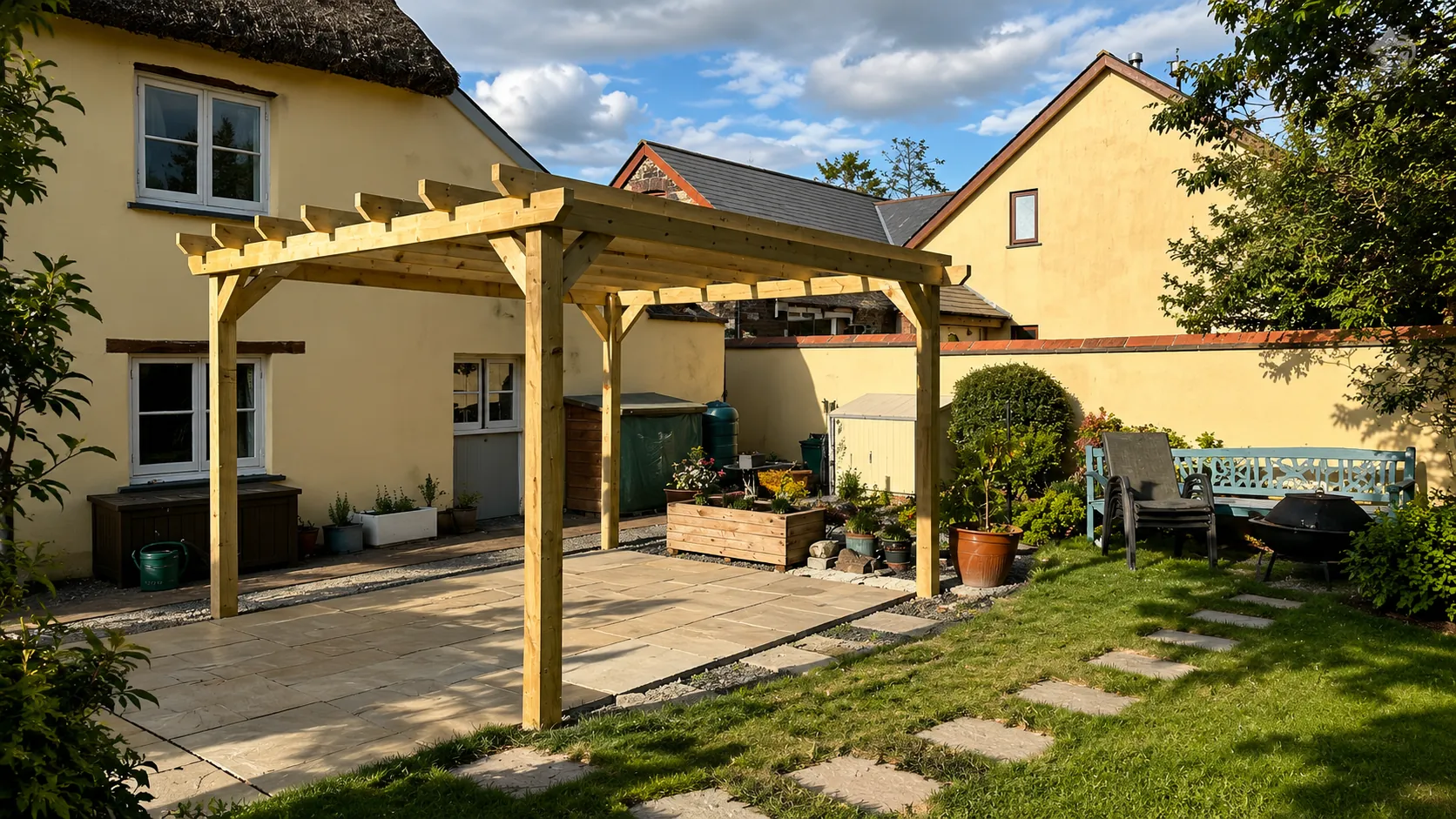
Do You Need Planning Permission for a Pergola?
In most cases, no. A freestanding or attached pergola that sits within your garden and meets certain size and height limits falls under permitted development rights. That means you can build it without submitting a planning application, provided the rules are followed.
The key word there is "provided." Permitted development isn't a free-for-all. It comes with conditions, and if your pergola breaches any of them, you could be asked to take it down or alter it after the fact. That's an expensive and frustrating outcome that a bit of forward planning easily avoids.
The Height Limits You Need to Observe
The most common reason a pergola falls outside permitted development is height. The rules are straightforward but worth spelling out:
Within 2 metres of a boundary: The pergola must not exceed 2.5 metres in height. This applies to most suburban gardens in Barnstaple, Bideford, and the surrounding villages where boundaries are close.
More than 2 metres from a boundary: The maximum height rises to 3 metres. If your garden is larger or the pergola is positioned well away from any fence or wall, you have a bit more headroom to work with.
These limits are measured from ground level to the highest point of the structure, including any decorative finials or beam ends. If you're planning a tall pergola to clear an existing tree or outbuilding, measure carefully before committing to a design.
When Permitted Development Doesn't Apply
There are several situations where permitted development rights are removed or restricted, and you'll need to submit a full planning application before building anything.
Listed Buildings
If your property is listed, any new structure including a pergola is likely to require listed building consent, regardless of size or height. The rules around listed buildings are strict and apply even to garden structures that aren't physically attached to the house. North Devon has a significant number of listed properties, particularly in villages like Bishops Tawton, Swimbridge, and along the coast at Appledore and Instow.
Conservation Areas
Properties within designated conservation areas face tighter controls. If you live in a conservation area, permitted development rights are reduced, and any pergola visible from a public highway may need planning permission. Barnstaple's conservation area covers much of the town centre, and several North Devon villages have their own designations. You can check whether your property falls within a conservation area through North Devon Council's online mapping service.
Article 4 Directions
In some cases, a local authority applies an Article 4 Direction, which removes specific permitted development rights in a particular area. These are less common but do exist in certain parts of North Devon where the council wants to protect the character of a streetscape. If you're unsure, a quick call to the planning department will confirm whether your address is affected.
Commercial or Rental Properties
Permitted development rights for garden structures apply to residential dwellings. If you're installing a pergola at a holiday let, a pub garden, or a commercial premises, different rules apply and you should seek advice from the planning authority.
Positioning Matters
Where you place the pergola on your plot affects whether it qualifies as permitted development. The structure should sit within the curtilage of the dwelling, meaning your garden or grounds, not on land beyond the principal elevation of the house. In practice, that means a pergola in the back garden or side return is usually fine, while one in the front garden facing the road is more likely to require permission.
If your garden includes land to the side or front of the house and you're planning a pergola there, it's worth checking with North Devon Council before proceeding. Front-of-house structures are more visible and more likely to be flagged.
Choosing Materials That Suit North Devon
Planning permission aside, the materials you choose have a big bearing on how well your pergola performs in a North Devon garden. The damp, salt-laden air along the coast and the wet winters across the region demand timber that can take a beating.
Pressure-treated Scandinavian redwood is the workhorse choice for pergolas in Barnstaple and the surrounding area. It's affordable, widely available, and treated to resist rot and insect attack. Cedar is a step up in terms of natural weather resistance and looks superb as it ages, though it costs more. For exposed coastal spots around Ilfracombe, Woolacombe, and Croyde, we sometimes recommend denser hardwoods or metal-framed designs where wind loading is a serious concern.
Whatever timber you choose, make sure it's been pressure-treated to Use Class 4 as a minimum. Surface-applied treatments alone won't protect posts that are set into the ground.
Practical Advice Before You Build
A few things worth doing before the first post goes in:
Talk to your neighbours. If the pergola will sit close to a boundary, a quick conversation avoids disputes later. A structure that's technically within the rules can still cause friction if it blocks light or overlooks a neighbouring garden.
Check for underground services. Before digging post holes, make sure you're not going to hit a drain, gas pipe, or electricity cable. Your utility provider can supply service plans.
Think about wind loading. North Devon gets some lively weather. A pergola with a solid roof or dense slats acts like a sail in high winds. Make sure the posts are set deep enough in concrete and the structure is braced properly.
Consider the view from the house. A pergola should frame a view, not block it. Stand at your back door or kitchen window and picture how the structure will look from inside before finalising the position.
Getting It Built Properly
A pergola is a relatively simple structure, but the difference between a good one and a wobbly one is all in the setting out and the fixings. Posts need to be plumb, beams need to be level, and every joint needs to be secure enough to handle a Devon gale. If you're not confident with a spirit level and a post hole digger, it's a job best left to someone who installs them regularly.
If you're considering a pergola for your North Devon garden and want honest advice on design, materials, and whether you need planning permission, we can help. We install bespoke pergolas across Barnstaple, Bideford, Ilfracombe, and the surrounding area, and we're happy to talk through the options on a free site visit.
Find out more about our pergola installation service in Barnstaple

About Nathan
Nathan has spent more than 10 years installing fences, pergolas, and garden structures across North Devon. He takes a practical, detail-first approach to every project, using materials that are properly specified for the coastal weather around Barnstaple, Bideford, and Ilfracombe.
Learn more about NathanPlanning a Pergola in North Devon?
Whether you're ready to go ahead or still weighing up your options, we're here to help with straightforward advice and a free, no-obligation quote.
Call 01271 626340 or contact us online to arrange a site visit.
Serving Barnstaple, Bideford, Ilfracombe, South Molton, and surrounding North Devon areas with bespoke pergola installation you can rely on.