A gate is the access point to your property, and in security terms, it is often the weakest link. A solid fence around your garden is only as good as the gate that sits in it. If the gate is flimsy, poorly hung, or secured with a cheap latch, it provides an open invitation to anyone looking for easy access to the back of your house.
Across Barnstaple, Bideford, and the surrounding North Devon area, most domestic security issues are opportunistic rather than planned. Someone walking past, trying a gate, finding it opens easily, and taking advantage. Good gate security is about making your property less appealing than the next one. It does not need to look like a fortress. It just needs to be solid, well hung, and properly locked.
This guide covers the practical steps you can take to secure your gates, from choosing the right gate in the first place to upgrading the locks and hinges on an existing installation.

Start With the Gate Itself: Is It Up to the Job?
Before thinking about locks and hinges, assess whether the gate is actually suitable for security purposes. A decorative garden gate made from lightweight trellis work is not a security gate, no matter what lock you put on it. A gate needs to be solid, robust, and tall enough to be a genuine obstacle.
Solid Construction
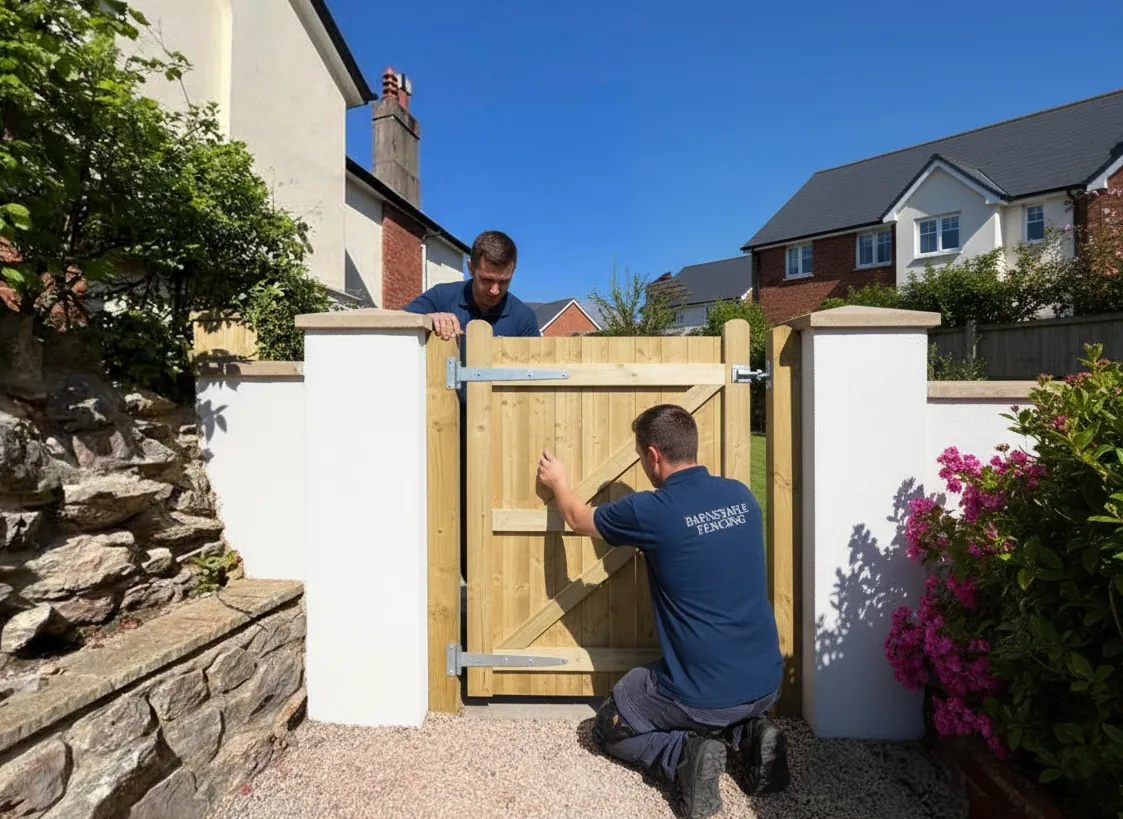
A security minded gate should be either closeboarded or ledged and braced. Closeboard gates have vertical featheredge boards nailed to a frame, providing a solid face that cannot be seen through. Ledged and braced gates have a framework of horizontal ledges and diagonal braces behind a cladding of boards, which gives the gate structural rigidity and stops it sagging over time.
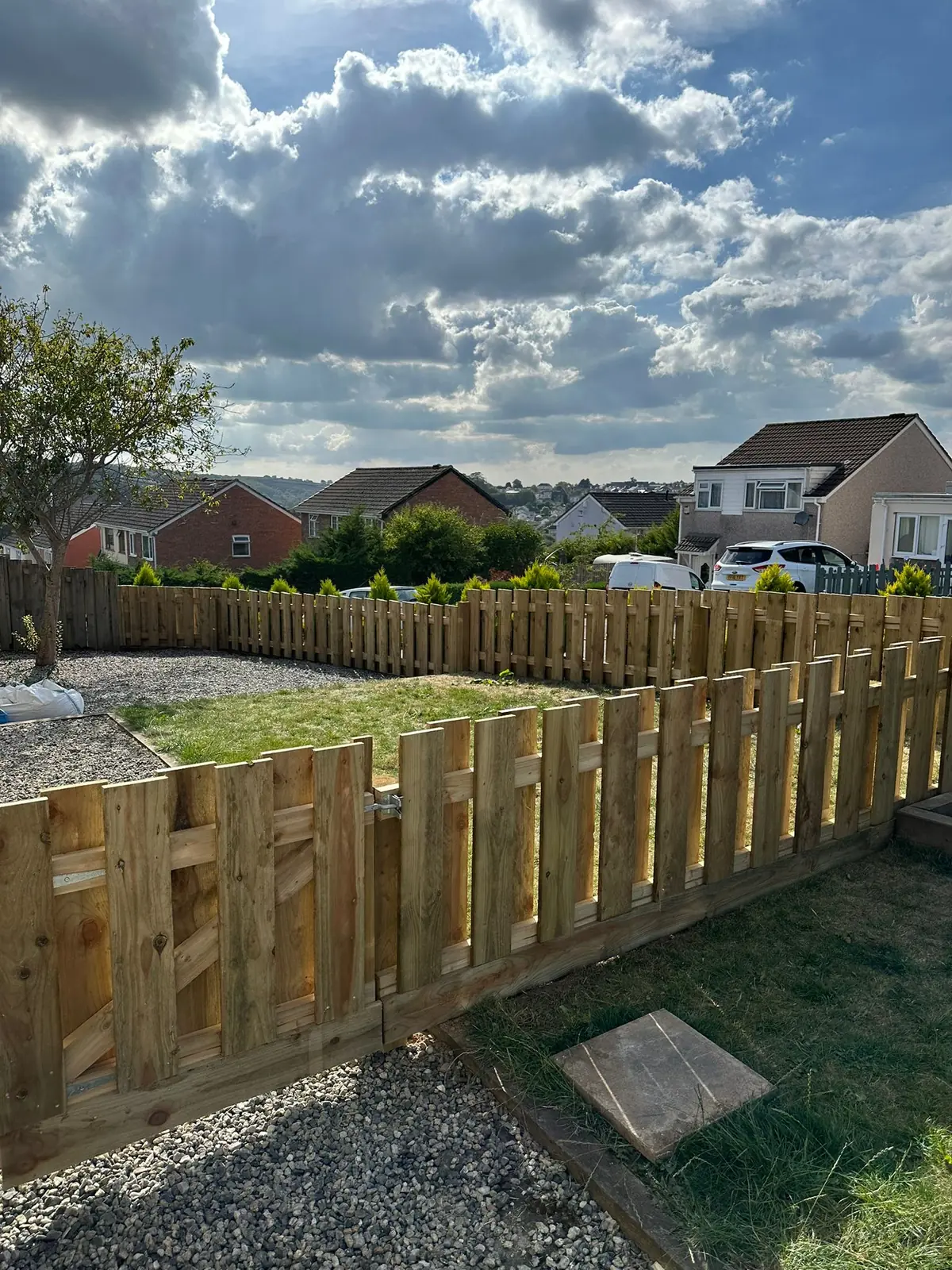
Avoid gates with large gaps between the boards. They may look attractive, but they allow someone to reach through and undo the latch from the outside. They also let people see into your garden, which defeats the security purpose of the fence either side.
Height Matters
A gate that is 3 foot high might mark a boundary, but it does not stop anyone climbing over it. For rear garden access, a gate should match the height of the fence either side, typically 6 foot (1.83 metres). This is high enough to require real effort to climb, particularly if the top of the gate is solid rather than offering a foothold.
For front gardens, where planning rules and aesthetics often favour a lower gate, pair it with a lock that prevents it being opened from outside. Even a 4 foot gate with a good lock is a better deterrent than a 6 foot gate with a simple latch.
Material Choice for North Devon
Timber is the standard choice for domestic gates in North Devon, and pressure treated softwood is perfectly adequate for most situations. For coastal properties around Ilfracombe, Appledore, and Instow, consider hardwood or metal framed gates if you want maximum longevity in salt laden air. Softwood gates in exposed coastal positions will need more frequent treatment to prevent rot and warping.
Find out more about our gate installation service in Barnstaple.
Locks: The First Line of Defence
The lock is what stops someone simply walking through your gate. The right lock depends on the gate type and how it is used.
Deadlock
A deadlock is the most secure option for a side or rear gate. It requires a key to open from both sides, meaning even if someone reaches over the gate, they cannot undo the lock without the key. Deadlocks are typically fitted to a horizontal rail on the gate and engage with a strike plate on the gate post.
The downside is convenience. You need a key every time you go through the gate, which can be annoying for everyday use. For this reason, deadlocks are best for gates that are not used constantly, such as side access gates that you mainly use for bin day or garden maintenance.
Rim Lock
A rim lock sits on the surface of the gate and has a latch that can be opened from inside without a key, but requires a key from outside. This is a good compromise for gates you use regularly, as you can pop out to the garden without fumbling for a key, but the gate remains locked from the outside.
Bolt and Padlock
A simple slide bolt on the inside of the gate, secured with a closed shackle padlock, is a cost effective option for rear gates. It is not as convenient as a deadlock but it is robust and straightforward. Use a galvanised or stainless steel padlock to resist corrosion, particularly in coastal areas.
What About Latches?
A standard gate latch, where the arm drops into a catch by gravity, is not a security device. It stops the gate blowing open in the wind, but anyone can lift the latch from outside with a stick or through the gap in the gate. If your gate currently only has a latch, upgrading to a proper lock is the single most effective security improvement you can make.
Hinges: The Forgotten Weak Point
A gate with a brilliant lock is useless if the hinges are weak. Hinges are the part of the gate that take the most stress, and they are also the part most often overlooked when people think about security.
Hinge Type
For any gate used for security, use cross band or hook and band hinges rather than lightweight T hinges. Hook and band hinges have a band that wraps around the gate post and hooks into a pin, distributing the weight of the gate along the full height of the band. They are much stronger than T hinges, which simply screw into the face of the post.
For heavy gates, adjustable hook and band hinges allow you to fine tune the gate position so it hangs perfectly plumb and does not drag.
Hinge Security
The other security consideration with hinges is that on many gates, the hinge pins can be lifted out from outside, allowing the gate to be removed entirely even if it is locked. This is a known technique and a genuine vulnerability.
There are several ways to address this:
- Use non lift off hinges where the pin is fixed and cannot be removed
- Fit a hinge bolt that prevents the gate being lifted off the pins even if they are accessible
- Weld the pin in place on metal gates
- Position the hinges so the pins are on the inside of the gate, out of reach from outside
If your current gate has standard lift off hinges with the pins accessible from outside, this is worth addressing. It is a common weakness that most people do not think about until it is pointed out.
Preventing Sag
A gate that sags is a gate that does not close properly, which means the lock does not engage and the gate becomes ineffective. Sag is caused by the weight of the gate pulling the hinges down over time, or by the gate frame itself warping.
A ledged and braced gate is designed to resist sag, with the diagonal brace transferring the weight to the bottom hinge. If your gate is sagging, it may need rehanging, a new brace, or heavier duty hinges. This is a straightforward repair that makes a big difference to both security and ease of use.
Automation: Electric Gates for Driveways
For properties with driveways, an automated gate adds a significant layer of convenience and security. You open the gate from your car without getting out, and it closes and locks automatically behind you. This is particularly useful for rural properties around South Molton, Winkleigh, and Chulmleigh, where driveways are longer and getting out in the rain to open a gate is a chore.
What to Consider
Underground or arm actuators. Underground operators are concealed in the ground and do not affect the appearance of the gate. Arm actuators are mounted on the back of the gate and posts and are more visible but easier to install and maintain.
Power supply. Electric gates need a mains power supply run to the gate, which can be a consideration for long driveways. Solar powered options exist for remote locations.
Safety features. Automated gates must have safety mechanisms to prevent crushing, typically photovoltaic sensors that stop the gate closing if something is in the way, and pressure sensitive edges that reverse the motor on contact.
Release mechanism. In a power cut, you need a manual release so you can still open the gate. Make sure this is fitted and that you know where the key is.
Electric gate installation is a specialist job and should be carried out by someone with experience of the safety and electrical requirements. We can advise on suitable systems for North Devon properties and handle the gate construction and hanging, working with an electrician for the automation.
Practical Deterrents Beyond the Gate
A few additional measures complement a secure gate and make your property less attractive to opportunists.
Lighting. A motion activated light above the gate is one of the most effective deterrents. Someone trying the gate at night is suddenly flooded with light, which is usually enough to make them move on. Solar powered security lights are easy to install and do not require an electrician.
Visibility from the house. If you can see the gate from a window, you are more likely to notice if someone is loitering. Keep planting around the gate trimmed back so it does not provide cover.
A bell or alarm. A simple battery operated gate alarm that sounds when the gate is opened is an inexpensive deterrent, particularly for side access gates that are not visible from the house.
Keep it locked. The most obvious point, but the most commonly ignored. A gate with a brilliant lock that is left unlocked is no more secure than one with a latch. Make a habit of locking side and rear gates every time you go through them.
Upgrading an Existing Gate
If your current gate is structurally sound but the security is lacking, you may not need a full replacement. Common upgrades we carry out include:
- Replacing a latch with a deadlock or rim lock
- Upgrading lightweight hinges to hook and band
- Fitting hinge bolts to prevent lift off
- Adding a bolt and padlock to the inside
- Rehanging a sagging gate so it closes and locks properly
These are relatively quick jobs that make a real difference. If your gate is rotten, warped, or simply too low to be effective, a replacement is the better investment.
Getting It Right
Gate security is not complicated, but it is often neglected. A solid gate, well hung on strong hinges, with a proper lock, will deter the vast majority of opportunistic access. It does not need to look aggressive or unattractive. A well made timber gate with quality ironmongery looks good and does the job.
If you would like advice on securing your gates, or you are thinking about a new gate installation, we are happy to come out and assess your property. We install and repair gates across Barnstaple, Bideford, Ilfracombe, South Molton, Great Torrington, and the surrounding area.
Contact us for a free gate installation quote

About Nathan
Nathan has spent more than 10 years installing fences, gates, and garden structures across North Devon. He takes a practical, detail-first approach to every project, using materials that are properly specified for the coastal weather around Barnstaple, Bideford, and Ilfracombe.
Learn more about NathanNeed a Secure Gate in North Devon?
Whether you want a new gate installation or an upgrade to your existing gate security, we can help with honest advice and a free, no obligation quote.
Call 01271 626340 or contact us online to arrange a site visit.
Serving Barnstaple, Bideford, Ilfracombe, South Molton, Great Torrington, and surrounding North Devon areas with professional gate installation built to last.