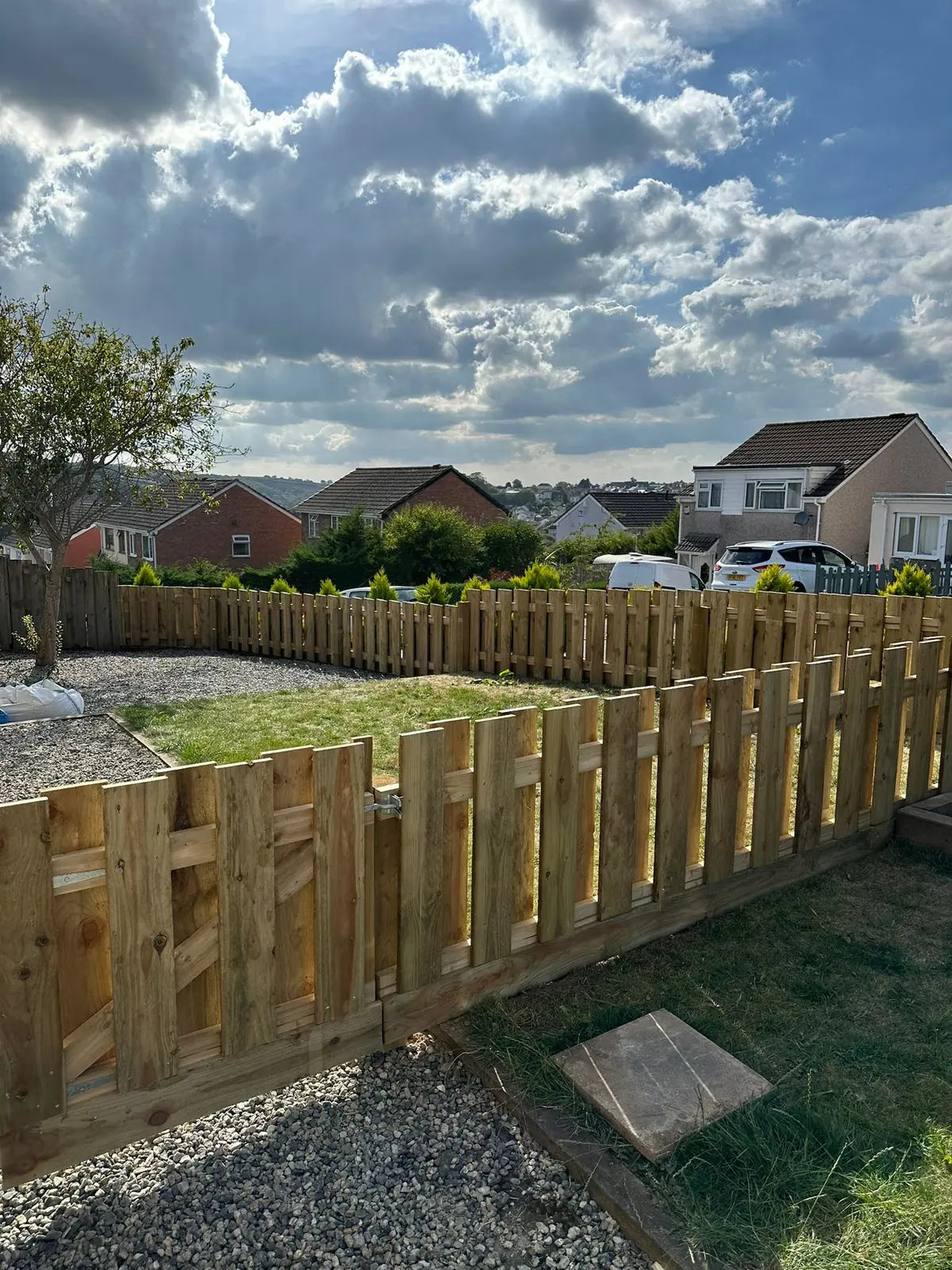
When homeowners in Barnstaple ask us which fence to install, the conversation almost always comes down to the same two options: closeboard or panel. They are the dominant fencing types across North Devon for a reason, because both provide solid privacy and security when built well. But they are fundamentally different in how they are constructed, how they perform, and what they cost.
This guide compares the two head to head, with North Devon conditions in mind. We will cover construction, wind resistance, lifespan, cost, maintenance, and suitability for sloping ground. By the end, you should have a clear idea of which one suits your garden.

How They Are Built: The Fundamental Difference
Understanding how each fence goes together is the key to understanding why they perform differently.
Panel Fencing
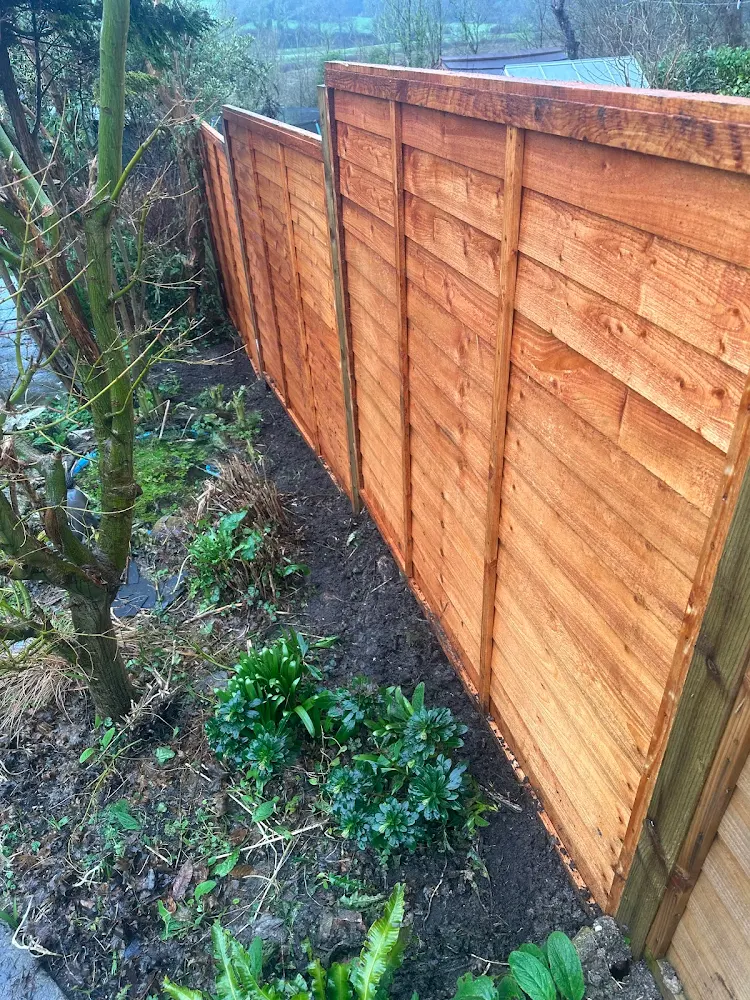
A panel fence is made from pre manufactured panels, each typically 6 feet (1.83 metres) wide. The panels slot between posts that are concreted into the ground at regular intervals. The most common panel types are:
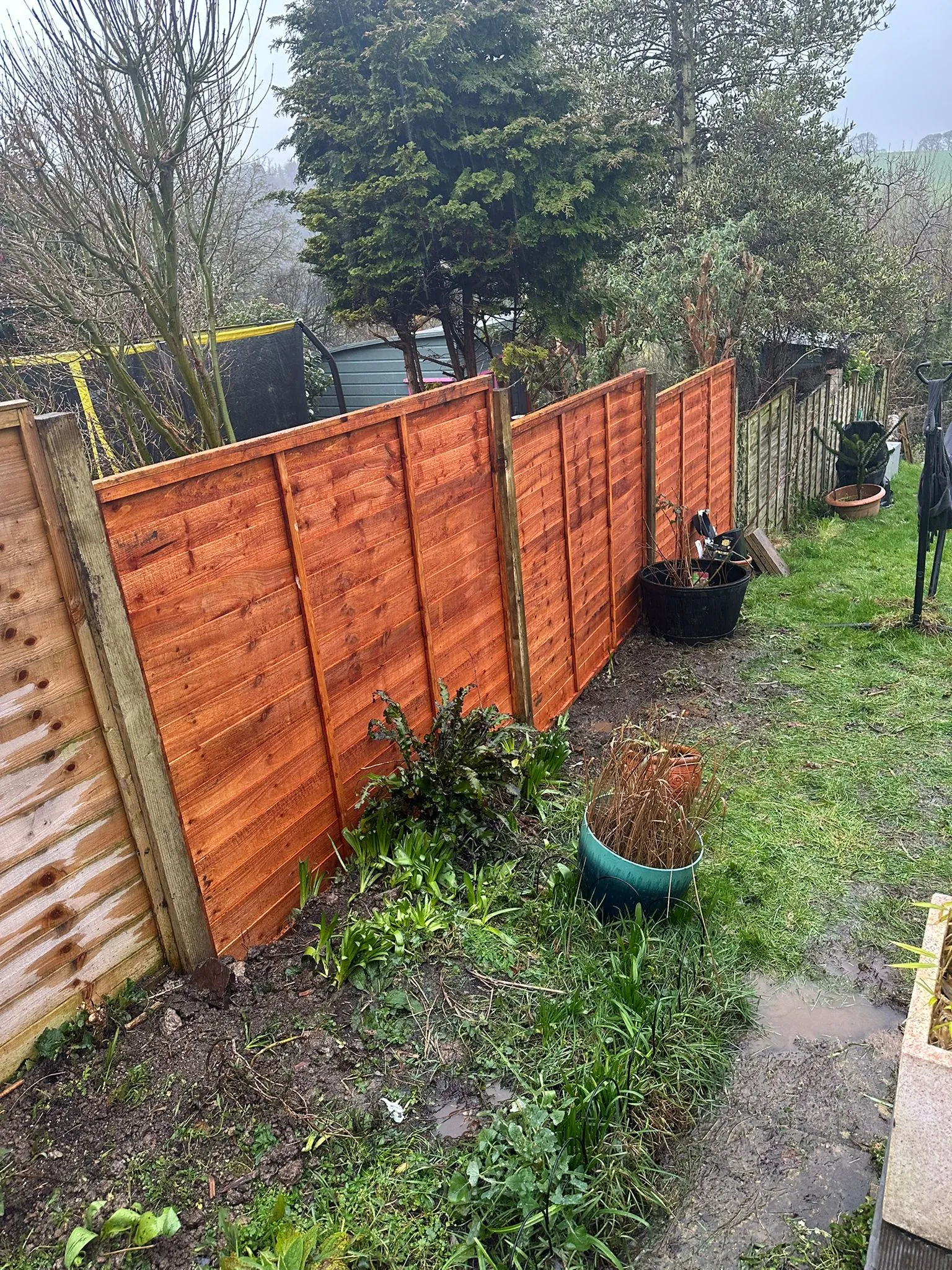
Lap panels (also called overlap panels): Horizontal boards are nailed to a softwood frame, overlapping each other to create a solid face. These are the cheapest and most widely available panels, sold in every builders merchant and DIY shed in North Devon. They are lightweight and adequate for sheltered gardens but are the weakest option.
Closeboard panels (sometimes called featheredge panels): Vertical featheredge boards are nailed to a framed backing with horizontal rails. These are heavier and stronger than lap panels but are still factory made units. They look similar to a site built closeboard fence but are not the same thing.
Waney edge panels: Inexpensive panels made from untreated waney edge boards. We do not recommend these for North Devon gardens as they have a very short lifespan in our wet climate.
The panels sit on gravel boards (timber or concrete planks at ground level) and are fixed to the posts with panel clips or screws. The whole installation can usually be completed quickly, which keeps labour costs down.
Closeboard Fencing
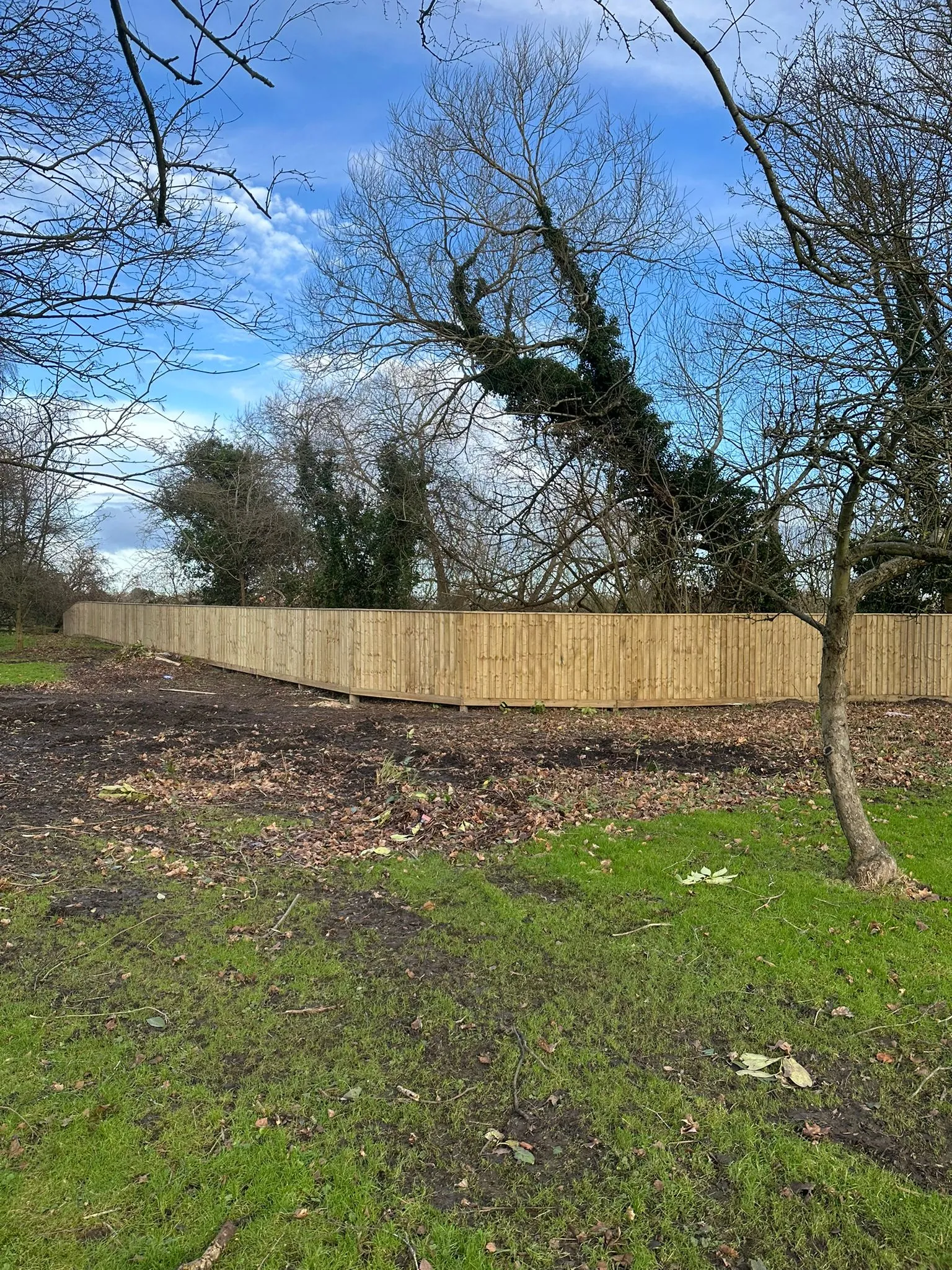
Closeboard fencing is built on site, board by board. Vertical featheredge boards are nailed to horizontal arris rails, which are fixed between sturdy timber posts. There are no pre made panels. The fence is a continuous run of timber, cut and fitted to the exact contours of the ground.
Because it is built on site, closeboard fencing follows slopes without stepping. Each board is cut to length individually, so the bottom of the fence sits close to the ground along its entire run, even on a sloping garden. This is a significant advantage for the many North Devon properties built on hillsides.
The posts for closeboard fencing are typically larger and set deeper than panel fence posts, because the fence is heavier and the wind loading on a solid face is considerable. We normally use 100mm by 100mm timber posts set in concrete at least 600mm deep, or concrete posts for maximum longevity.
Read more about our closeboard fence installation service.
Wind Resistance: The North Devon Test
This is where the comparison gets serious for Barnstaple homeowners. North Devon is not a gentle climate for fencing. The prevailing south westerly winds come straight off the Atlantic, and winter storms regularly bring gusts of 60 to 80 mph to coastal areas. Even inland, the wind funnels through valleys and over hilltops with surprising force.
Panel fencing in wind: A solid panel acts like a sail. When the wind hits it, the force is transferred to the posts and the concrete holding them. If the posts are timber and set shallow, they will eventually loosen. If the panels are old or the fixings have rusted, a single storm can lift a panel clean out of the posts and dump it in next door garden.
Concrete posts improve the situation significantly, because they do not rot at ground level and they are heavier and more stable. But the panels themselves remain the weak point. A lap panel is particularly vulnerable because the frame is lightweight and the overlap boards can blow out individually if the fixings fail.
Closeboard fencing in wind: Because closeboard is built as a continuous structure with no panel joints, there are no weak points where a section can blow out. The arris rails span multiple posts, distributing the wind load along the fence rather than concentrating it at each post. The featheredge boards are individually nailed, so even if one board is damaged, the rest of the fence remains intact.
For exposed sites around Codden Hill, the coast at Croyde and Saunton, or the open farmland around South Molton and Winkleigh, closeboard is the clear winner. For sheltered suburban gardens in Barnstaple itself, a well installed panel fence on concrete posts will cope with most storms.
Lifespan: How Long Will Each Last?
Panel fencing: Good quality pressure treated panels on timber posts typically last 12 to 15 years before the posts or panels need replacing. The same panels on concrete posts can last 20 years or more, because the posts do not rot and the panels are held securely. Lap panels tend to fail first, with the overlap boards separating from the frame after 8 to 10 years in exposed positions.
Closeboard fencing: Pressure treated closeboard fencing on timber posts lasts 20 to 25 years. On concrete posts, 30 years or more is realistic. Individual boards can be replaced if they split or rot, which extends the life of the fence without needing a full replacement. The arris rails and posts are the structural elements, and these last the longest because they are thick section timber treated to Use Class 4.
The key difference is repairability. When a panel fence fails, you replace the whole panel. When a closeboard fence has a damaged board, you replace just that board. Over the life of the fence, this makes closeboard cheaper to maintain even though it costs more upfront.
Cost Comparison
We are often asked for a straightforward price comparison, and the honest answer is that it depends on the site. But as a general guide for a typical 10 metre run of 6 foot fencing:
Panel fencing (lap panels on timber posts): This is the most cost effective option. Materials are cheaper, installation is faster, and labour costs are lower. It is the right choice for budget conscious projects on flat, sheltered ground.
Panel fencing (closeboard panels on concrete posts): A step up in both cost and durability. The panels are stronger, the concrete posts eliminate the most common failure point, and the overall lifespan is significantly longer.
Closeboard fencing (site built on timber posts): More expensive than panel fencing due to the additional labour and materials. The boards, arris rails, and posts all cost more than a pre made panel, and the installation takes longer because each board is fixed individually.
Closeboard fencing (site built on concrete posts): The premium option. This is the most expensive configuration but also the longest lasting. For a fence you expect to be standing in 30 years, it is the best value over its lifetime.
If budget is the primary concern and your garden is relatively sheltered, panel fencing is the sensible choice. If you want a fence that will still be solid in two decades, closeboard pays for the difference.
Sloping Ground: A Clear Winner
Many gardens in and around Barnstaple slope, some gently and some sharply. This is where the construction difference between the two fence types really matters.
Panel fencing on a slope: Panels are rectangular and rigid. On a slope, they have to be stepped, meaning each panel sits at a different height to follow the ground. This creates triangular gaps underneath the fence at the lower end of each step, which are unsightly and undermine the privacy the fence is supposed to provide. Cutting panels to size on site is possible but weakens the structure and voids any manufacturer warranty.
Closeboard fencing on a slope: Because the boards are fixed individually, they can be cut to follow the ground contour exactly. The bottom of the fence sits close to the ground along its entire length, with no gaps. On a steep slope, the fence simply rakes downhill in a smooth line. This is why closeboard is the standard choice for the sloping gardens around Great Torrington, the hills above Bideford, and the valleys around Chulmleigh and Winkleigh.
If your garden has any meaningful slope, closeboard is almost always the better choice for this reason alone.
Maintenance Requirements
Both fence types benefit from regular treatment, but the maintenance demands differ.
Panel fencing: Check annually for loose panels, rusted clips, and rotting posts. Re treat the timber every three to four years with a quality wood preservative. If a post rots, replacing it means lifting the panels either side, which is a bigger job than it sounds. Concrete posts eliminate this issue entirely.
Closeboard fencing: Check annually for split or loose boards and any movement in the posts. Re treat every three to four years. Replacing a damaged board is straightforward and inexpensive. The arris rails and posts rarely need attention if they were properly installed.
Making Your Decision
To summarise, here is a quick reference guide:
Choose panel fencing if:
- Your garden is flat and relatively sheltered
- Budget is the primary consideration
- You need a quick replacement for a damaged boundary
- The fence is in a suburban setting with neighbouring fences for wind shelter
Choose closeboard fencing if:
- Your garden is exposed to wind or coastal weather
- The ground slopes and you want a clean run without gaps
- You want the longest lasting fence possible
- You are fencing a rural or agricultural property
- You want a fence that can be repaired board by board rather than panel by panel
Both options, when installed properly with treated timber and well set posts, will serve your garden well. The choice comes down to your site, your budget, and how long you want the fence to last.
If you would like specific advice for your garden, we are happy to come out and take a look. We install both closeboard and panel fencing across Barnstaple, Bideford, Ilfracombe, South Molton, and the surrounding area.
Contact us for a free site visit and quote

About Nathan
Nathan has spent more than 10 years installing and repairing fences, decks, and garden structures across North Devon. He takes a practical, detail-first approach to every project, using materials that are properly specified for the coastal weather around Barnstaple, Bideford, and Ilfracombe.
Learn more about NathanNeed Fencing in Barnstaple or North Devon?
Whether you have decided on closeboard or panel fencing, or you are still weighing it up, we can help with honest advice and a free, no obligation quote.
Call 01271 626340 or contact us online to arrange a site visit.
Serving Barnstaple, Bideford, Ilfracombe, South Molton, Great Torrington, and surrounding North Devon areas with professional fencing installation built to last.