Living on the North Devon coast is a wonderful thing, but it is not kind to garden gates. The salt laden air, the constant damp, and the relentless wind combine to test every material and fixing to its limit. A gate that would last twenty years in a sheltered inland garden in South Molton might need replacing in eight on the coast at Ilfracombe or Appledore, simply because the environment is that much more aggressive.
The good news is that with the right material choices, proper treatment, and sensible design, a coastal gate can still give you years of reliable service. This guide walks through what to consider when choosing a gate for a coastal North Devon property, from timber selection to hardware and design.

The Coastal Challenge: What Salt Air Does to Gates
Before looking at solutions, it helps to understand the problem. Coastal exposure affects gates in three distinct ways.
Timber degradation. Salt crystals deposited on timber draw moisture from the air, keeping the surface damp even when it has not rained. This constant dampness encourages mould, algae, and eventually rot. It also breaks down surface treatments faster than inland exposure, meaning a gate that is fine in Barnstaple might need retreating twice as often in Instow.
Metal corrosion. This is the big one. Salt air accelerates corrosion of ferrous metals dramatically. Standard steel hinges, latches, and bolts that would last a decade inland can rust through in two or three years on the coast. The salt attacks the metal surface, and once rust takes hold, it spreads beneath the surface treatment and undermines the fixing from inside.
Wind loading. Coastal properties face the full force of Atlantic weather. A solid gate acts like a sail, and the hinges and posts take the full load. Gates that are too wide, too tall, or hung on lightweight hinges will sag, drop, or blow open in strong winds.
Understanding these three factors informs every material and design choice that follows.
Timber Selection for Coastal Gates
If you prefer the look of a timber gate, and most people in North Devon do, the species and treatment you choose make a significant difference to longevity.
Pressure Treated Softwood
The standard choice for domestic gates across Devon. Scandinavian redwood, pressure treated to Use Class 4 for ground contact, is affordable, widely available, and perfectly serviceable for coastal use provided it is maintained. The key word is maintained. A softwood gate on the coast needs retreating every year or two, not every three to four years as it would inland.
Softwood gates are best suited to sheltered coastal positions, such as a side gate in a courtyard or a front garden gate protected by a wall. For fully exposed positions directly facing the sea, softwood will struggle even with diligent maintenance.
Cedar
Western red cedar is naturally resistant to rot and insect attack without any chemical treatment, thanks to natural oils in the timber. It weathers to an attractive silver grey if left untreated, and it copes with coastal exposure better than softwood. Cedar gates cost more than softwood but offer better natural durability in marine environments.
Cedar is a good choice for visible front garden gates in coastal villages like Instow and Appledore, where appearance and longevity both matter.
Hardwood
Dense tropical hardwoods like iroko and balau are the premium timber choice for coastal gates. They are naturally resistant to rot, moisture, and salt without any treatment, and they last 20 to 30 years even in exposed marine environments. They cost significantly more than softwood, but for a gate that you do not want to replace for decades, they are the longest lasting timber option.
Hardwood gates suit larger properties and main entrance gates where the investment is justified by the prominence and the expected lifespan.
Green Oak
English oak, fresh sawn and untreated, weathers to a silver grey and lasts 15 to 25 years in coastal conditions. It is a traditional material that suits period properties and country houses, and it has natural resistance to moisture and rot. Green oak moves as it seasons, so gates need to be designed to accommodate this movement, but a well made oak gate is a beautiful and durable thing.
Metal Gates for Maximum Coastal Durability
For the ultimate in coastal durability, metal gates are worth considering. They do not rot, warp, or split, and with the right finish they resist salt corrosion indefinitely.
Powder Coated Aluminium
Aluminium does not rust, making it ideal for coastal locations. Powder coating provides a durable coloured finish that lasts for years without repainting. Aluminium gates are lightweight, which reduces the load on hinges and posts, and they are available in a range of modern and traditional styles.
The main drawback is appearance. Aluminium gates do not have the warmth and character of timber, and in a traditional North Devon setting they can look out of place. They are best suited to contemporary properties or where durability is the overriding priority.
Galvanised Steel with Powder Coating
Steel is stronger than aluminium and can be used for larger gates and driveway gates. Hot dip galvanising provides a zinc coating that prevents rust, and a powder coat finish on top gives a clean, coloured surface. Properly galvanised and powder coated steel gates will last 20 years or more on the coast with minimal maintenance.
The weight of steel means the posts and hinges need to be correspondingly heavy duty. This is a job for professional installation.
Gate Styles for Coastal Properties
The style of gate you choose affects both its appearance and how well it performs in coastal winds.
Ledged and Braced
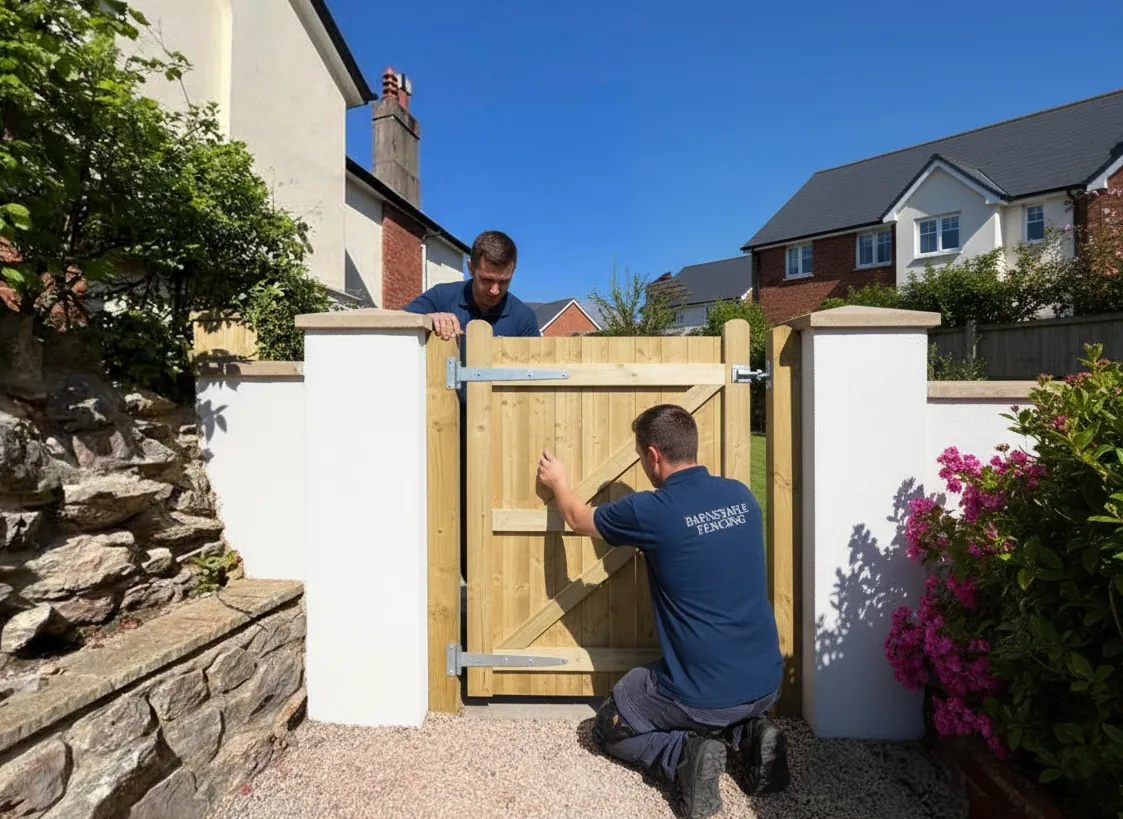
The traditional Devon farm gate style. Horizontal ledges and a diagonal brace support vertical boards. Simple, robust, and easy to repair. The brace prevents sagging, which is critical for a gate that will be pushed by coastal winds. This style suits rural and agricultural properties around Braunton, Croyde, and the North Devon coast.
Closeboarded
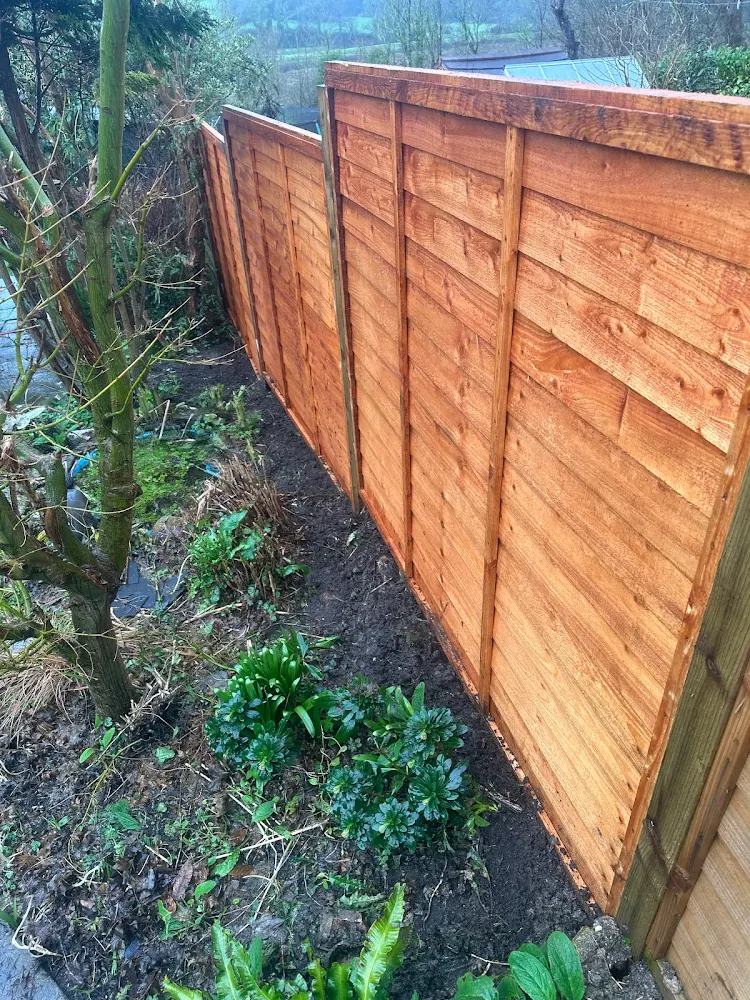
Vertical featheredge boards on a framed backing, matching a closeboard fence either side. This is the most secure and private option, and the solid face stands up well to wind provided the hinges are up to the job. Closeboarded gates are the standard choice for side and rear access gates.
Slatted
Horizontal or vertical boards with gaps between them. Slatted gates look contemporary and allow some airflow, which reduces wind loading. The gaps also mean less privacy and security. Slatted gates suit modern properties and front gardens where full privacy is not needed.
Hit and Miss
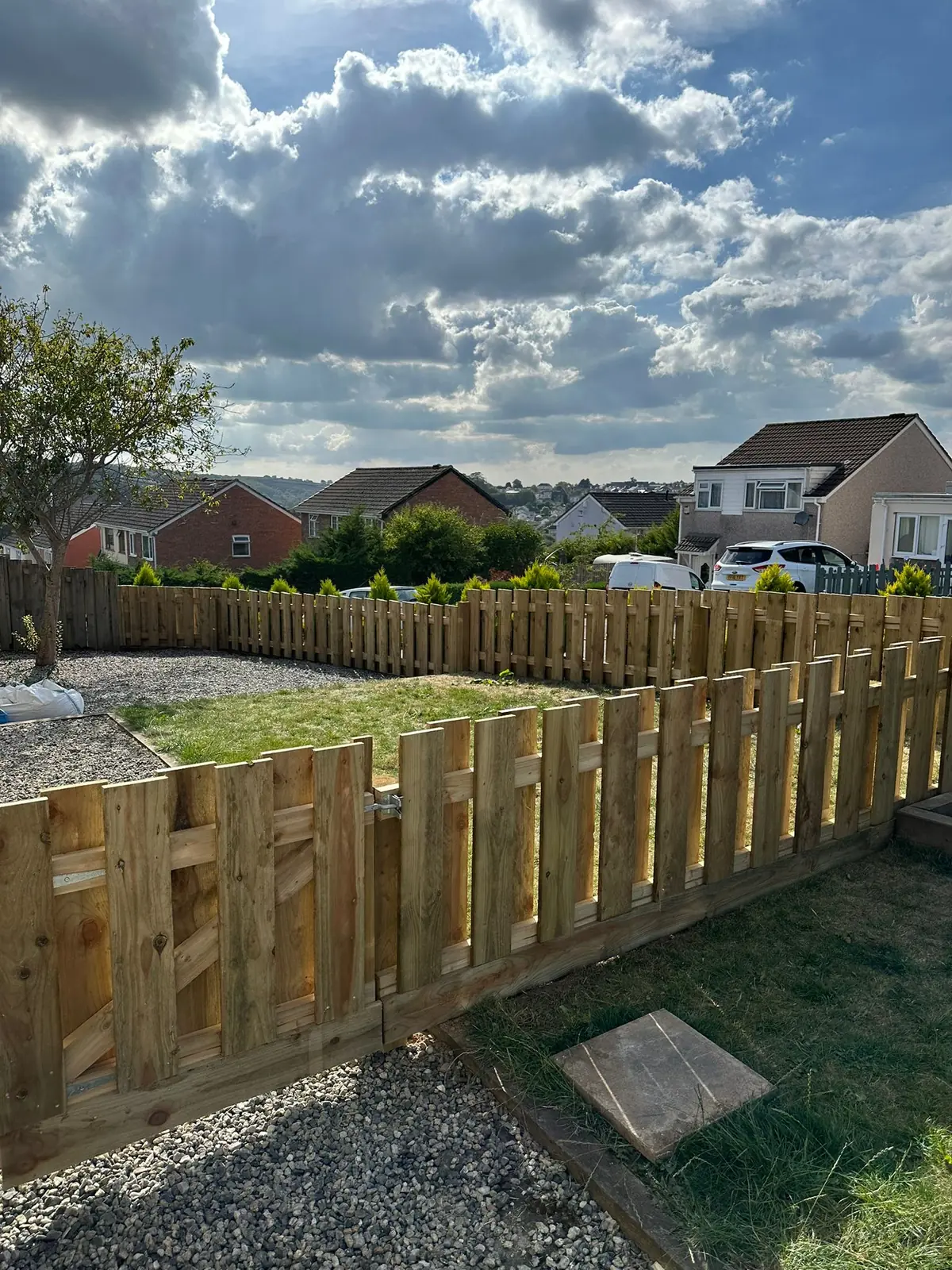
Boards fixed alternately on the front and back of the frame, creating a semi transparent gate that allows air to pass through. This is an excellent choice for exposed coastal positions because it significantly reduces wind load while still providing a visual barrier. The airflow through the gate means it is less likely to be blown open or to stress the hinges in a gale.
Sizing Your Gate
Getting the size right is more critical on the coast than inland, because a gate that is too wide or too tall acts as a bigger sail in the wind.
Width
A standard pedestrian gate is 900mm to 1000mm wide. Wider gates put more leverage on the hinges and are more prone to sagging. For openings wider than 1.2 metres, consider a pair of gates rather than a single leaf. Two narrower gates are more stable and easier to hang than one wide one.
Height
Match the gate height to the fence either side for visual consistency and security. For side and rear access, 1.8 metres (6 foot) is standard. For front gardens, 1.2 metres (4 foot) is typical and usually sufficient for boundary marking without being fortress like.
Post Size
Coastal gates need heavier posts than inland gates because of the wind loading. Use 100mm by 100mm timber posts as a minimum, set at least 600mm deep in concrete. For wider or taller gates, consider 125mm posts or concrete posts for maximum stability.
Hardware: The Make or Break Detail
The hardware on a coastal gate is where most installations fail. Standard ironmongery will rust and seize within a few years of coastal exposure.
Hinges. Use stainless steel or hot dipped galvanised hook and band hinges. Brass is also an option for coastal locations. Avoid untreated steel or zinc plated hinges, which will corrode rapidly.
Locks and latches. Choose stainless steel or brass locks and latches. A stainless steel rim lock or deadlock will operate smoothly for years, while a standard steel mechanism will seize up as salt corrosion takes hold.
Bolts and screws. Every fixing on the gate should be stainless steel or galvanised. It is a small detail that makes a big difference. A gate built with stainless fixings will still be sound in ten years, while one built with standard fixings will have rust streaks and loose joints within three.
Maintenance for Coastal Gates
Even with the best material choices, a coastal gate needs more attention than an inland one.
Inspect twice a year. Check hinges, latches, and fixings for corrosion. Catching rust early means a quick clean and re coat rather than a full replacement.
Re treat timber annually. A coat of quality wood preservative each spring will keep a timber gate protected through the following winter. Use a product with water repellent properties.
Lubricate moving parts. Hinges and locks need oiling a couple of times a year to keep them operating smoothly and to displace moisture that could cause corrosion.
Check the posts. Coastal wind will find any weakness in the gate post. Check that the post is plumb and solid in the ground, and re set it if there is any movement.
Getting the Right Gate for Your Coastal Home
A coastal gate is a different proposition from an inland one, and the choices you make about timber, hardware, and design will determine whether it lasts five years or twenty. The key is to specify everything for the conditions it will face, not for average weather.
If you are on the North Devon coast and thinking about a new gate, we are happy to come out, assess the exposure, and recommend the right combination of materials and design. We install gates from Ilfracombe to Appledore, and everywhere in between.
Find out more about our gate installation service

About Nathan
Nathan has spent more than 10 years installing fences, gates, and garden structures across North Devon. He takes a practical, detail-first approach to every project, using materials that are properly specified for the coastal weather around Barnstaple, Bideford, and Ilfracombe.
Learn more about NathanNeed a Gate on the North Devon Coast?
Whether you are in Ilfracombe, Appledore, Instow, or anywhere along the North Devon coastline, we can help with a gate built to withstand the marine environment.
Call 01271 626340 or contact us online to arrange a site visit.
Serving Barnstaple, Bideford, Ilfracombe, Braunton, Appledore, and surrounding North Devon coastal areas with professional gate installation built to last.