If you live in or around Barnstaple, you will know that a garden fence here is not just a decorative boundary. It is the thing standing between your patio and a February gale blowing up the Taw Valley, or the screen that gives you privacy from a busy lane in Fremington, or the front boundary that sets the tone for a cottage in Swimbridge. Choosing the right fence means thinking about what your garden actually needs, not just what looks good in a catalogue.
This guide walks through the main fencing types we install across North Devon, where each one works best, and the practical questions you should ask before deciding. Whether you are replacing a storm damaged boundary in Bideford or fencing a new build in Landkey, the same principles apply.

Start With the Purpose: What Is Your Fence Actually For?
Before looking at styles, think about what your fence needs to do. Most garden fences serve at least one of four purposes, and many serve several at once.
Privacy. If your garden backs onto a public path, overlooks a neighbour upstairs window, or sits close to a busy road like the A3125 through Braunton, you want a solid fence with no gaps. Panel fencing and closeboard fencing are the two main options here.
Security. Keeping dogs in, keeping children safe, and deterring opportunistic access to the back of your property. Taller fencing with sturdy posts and a matching gate is the answer. Closeboard is the strongest option, but a well installed panel fence with concrete posts does the job for most homes.
Wind shelter. North Devon gardens take a battering from coastal winds, particularly around Ilfracombe, Croyde, and Saunton, but also inland where the wind funnels through valleys around Bishops Tawton and Landkey. A solid fence reduces wind load on your garden, but it also takes the full force itself, so the construction needs to be up to it.
Decoration and boundary marking. Front gardens in particular often do not need full privacy. A picket fence or low trellis defines the boundary, looks attractive from the street, and keeps the front of the house feeling open and welcoming.
Write down your top two priorities before going any further. It will narrow the choice considerably.
Panel Fencing: The Practical All Rounder
Panel fencing is the most common garden boundary in Barnstaple and across North Devon, and for good reason. It is cost effective, quick to install, and available in a range of heights and styles to suit most situations.
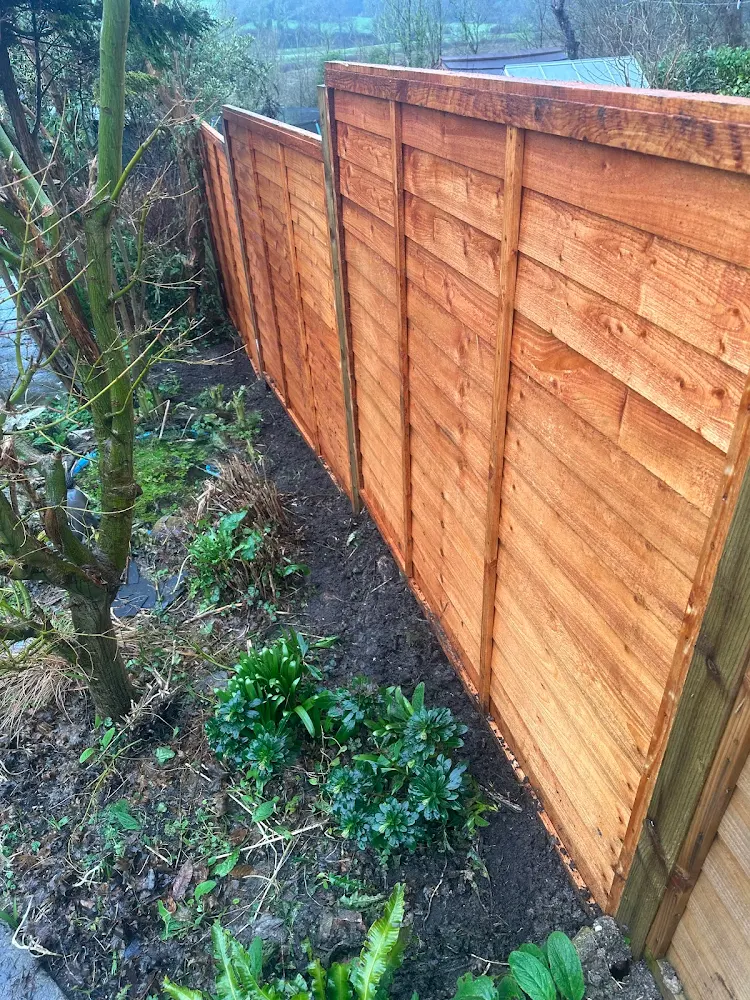
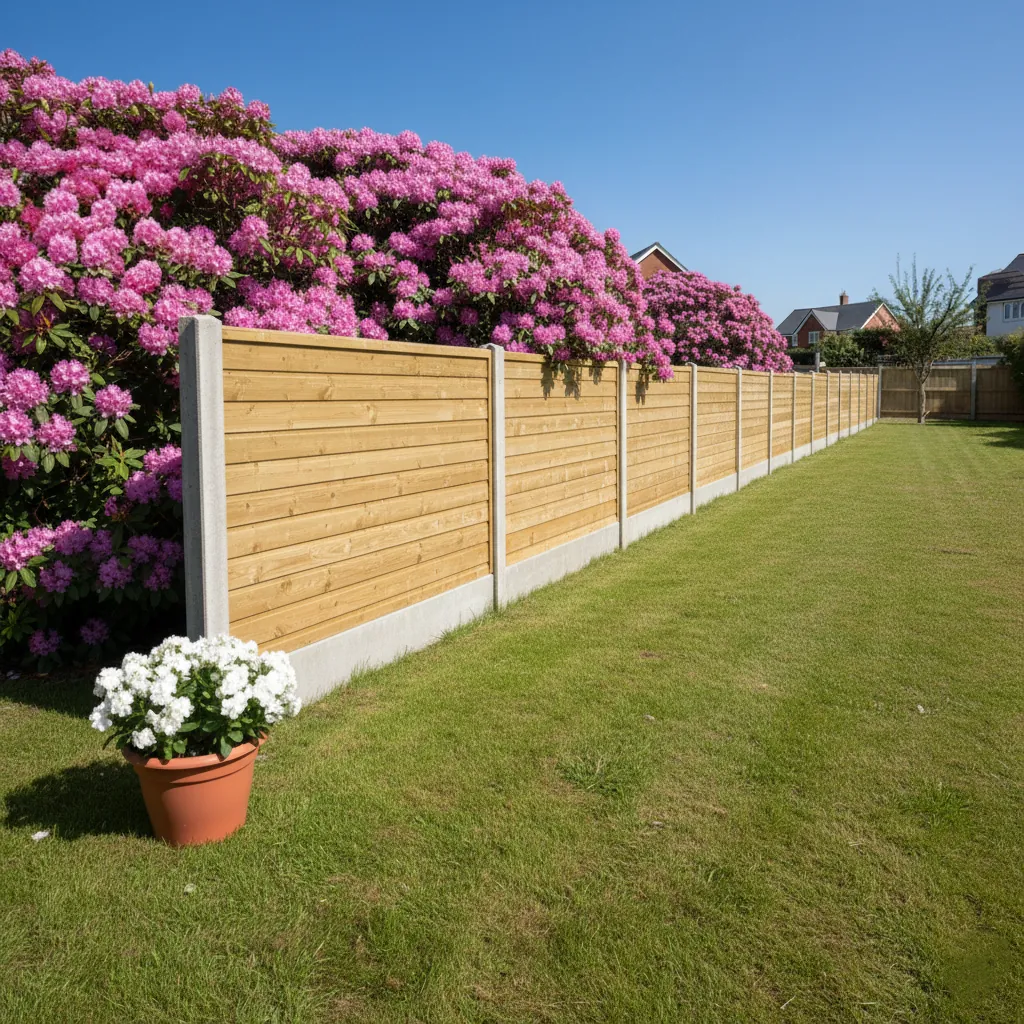
A panel fence consists of pre manufactured wooden panels slotted between timber or concrete posts. The panels are typically 6 feet wide and come in heights from 3 foot up to 6 foot. Lap panels are the budget option, with overlapping horizontal boards. Closeboard panels, sometimes called featheredge panels, are heavier and stronger, with vertical boards nailed to a framed backing.
Where panel fencing works best: Flat or gently sloping gardens in suburban settings, such as the estates around Roundswell and Bickington, or established residential streets in Barnstaple itself. It is the fastest way to replace a run of damaged fencing and get your privacy back quickly.
Where it struggles: Steeply sloping ground, where panels either have to be stepped (creating gaps underneath) or cut to size on site, which weakens the structure. It is also less suited to very exposed sites where wind loading on a solid panel will eventually loosen the posts, no matter how well they are concreted.
Lifespan and maintenance: Good quality pressure treated panels last 15 to 20 years. Concrete posts outlast timber posts by a wide margin and are worth the extra cost on exposed sites. A fresh coat of preservative every three to four years extends the life of the timber considerably.
If panel fencing sounds right for your garden, you can read more about our panel fence installation service here.
Closeboard Fencing: The Heavy Duty Option
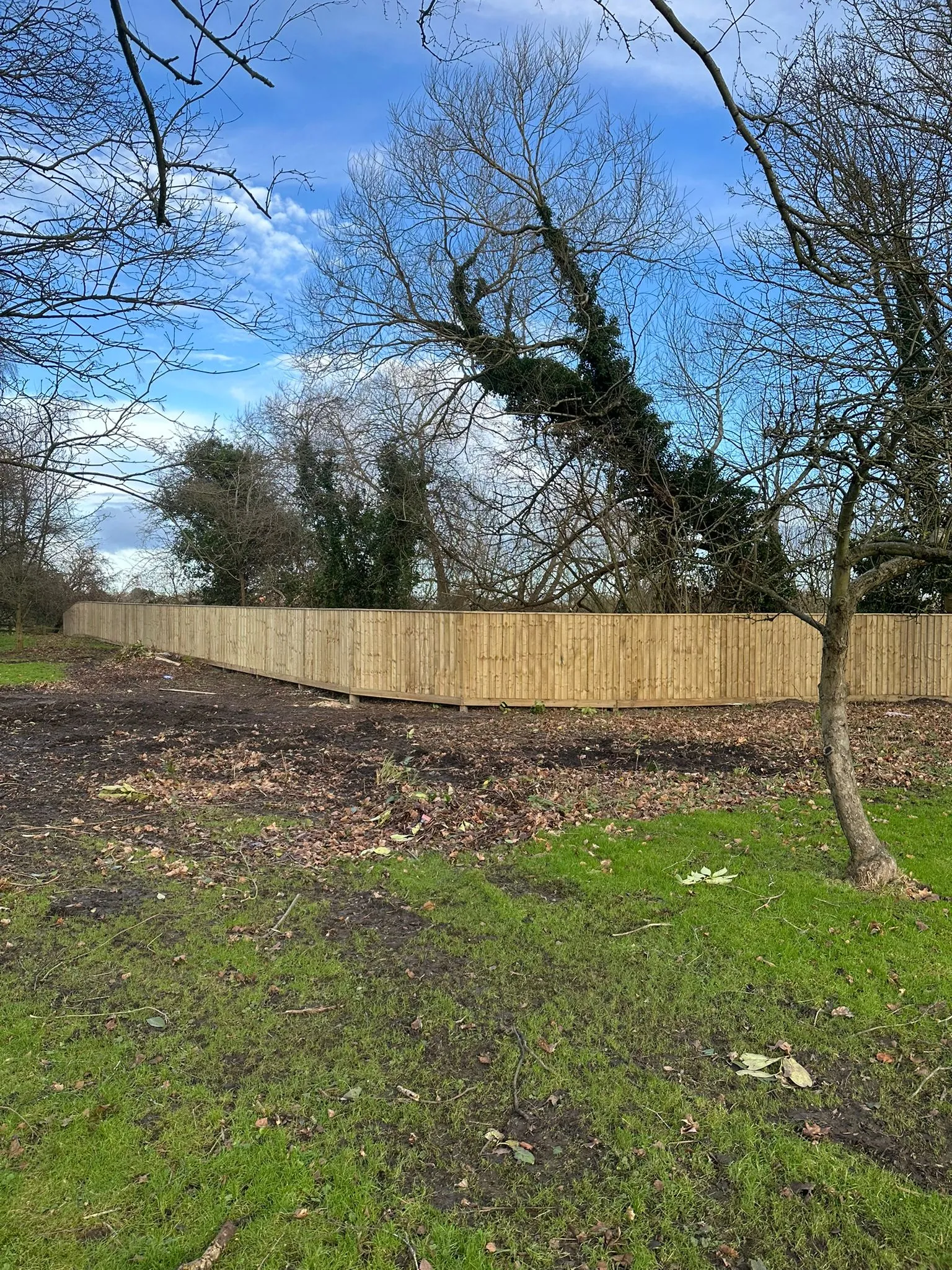
Closeboard fencing, also known as featheredge fencing, is built on site rather than slotted together from pre made panels. Vertical featheredge boards are nailed to horizontal arris rails, which are fixed between sturdy timber posts. The result is a continuous, solid fence with no weak points at panel joints.
This is the fencing we recommend for exposed North Devon sites, sloping ground, and anywhere that a fence needs to take real punishment from the weather. Because it is built up board by board, it follows the contour of the ground without stepping, which makes it ideal for the sloping gardens common around Great Torrington, South Molton, and the hills above Barnstaple.
Where closeboard works best: Exposed sites, sloping gardens, boundaries that need to be taller than 6 foot, and anywhere a long lasting, robust fence is the priority. It is the standard choice for agricultural and rural properties across Devon.
Where it is overkill: A flat, sheltered suburban back garden where a panel fence would do the same job for less money. Closeboard costs more in materials and labour because it takes longer to install, so it is worth choosing where the extra strength is actually needed.
Lifespan and maintenance: Pressure treated closeboard fencing lasts 20 to 25 years or more. The individual boards can be replaced if one gets damaged, which is an advantage over panel fencing where a damaged panel means replacing the whole unit.
For a deeper comparison between closeboard and panel fencing, see our closeboard fence installation page.
Picket Fencing: For Character and Front Gardens
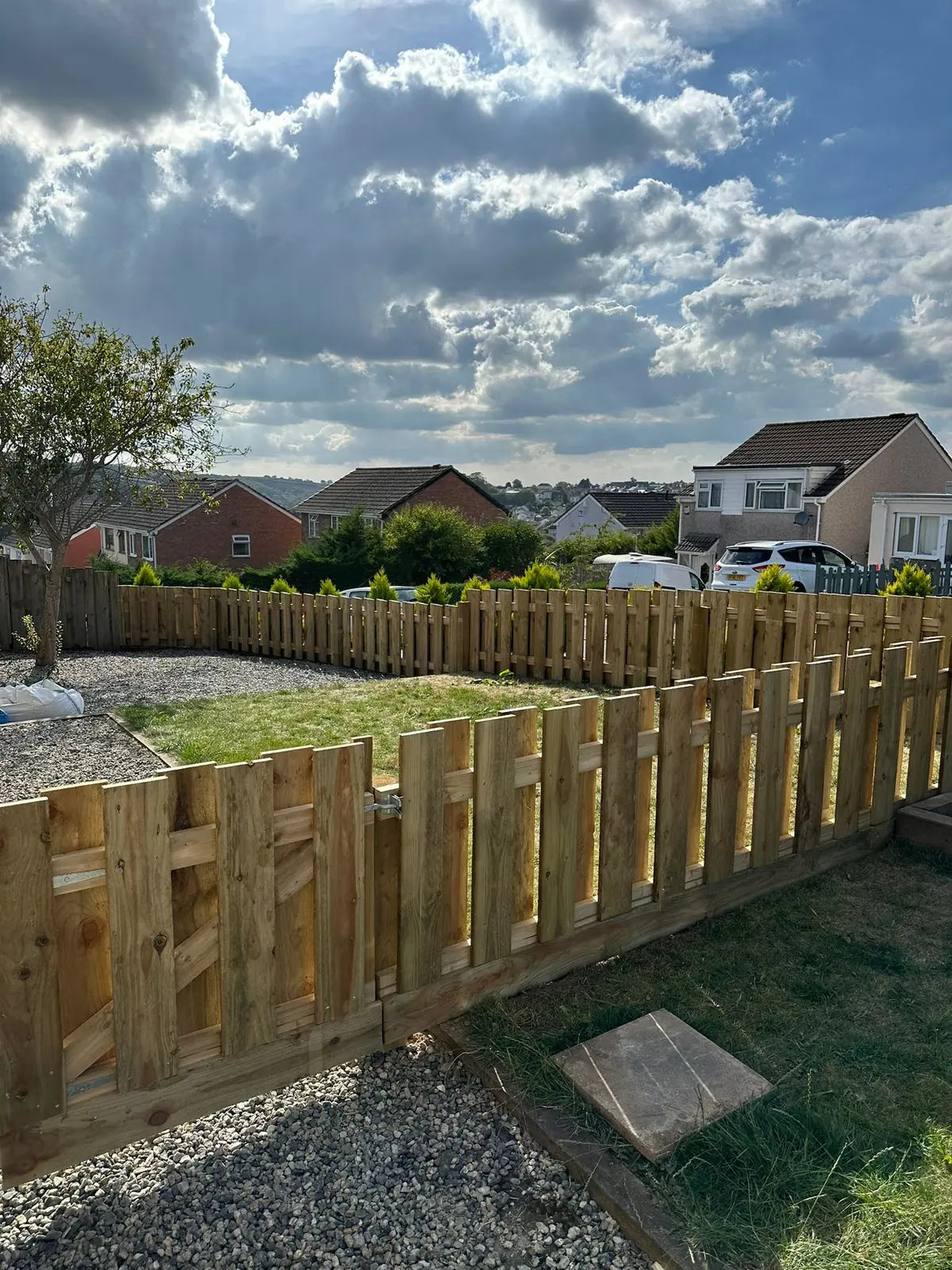
Picket fencing is the traditional choice for front gardens, cottage boundaries, and anywhere you want to define a space without blocking the view. Vertical pales with gaps between them are fixed to horizontal rails, usually topped with a pointed or rounded profile.
In North Devon, picket fencing suits the character of older properties particularly well. The Victorian and Edwardian terraces around Pilton and the cottage streets of Bishops Tawton look right with a white or natural timber picket front boundary. It also works beautifully for coastal properties in Instow and Appledore, where a solid fence would feel oppressive but an open boundary still marks the line.
Where picket works best: Front gardens, cottage properties, coastal homes where you want to preserve a view, and low level boundary marking anywhere up to about 1.2 metres high.
Where it does not work: Anywhere you need privacy or serious wind shelter. The gaps between pales let light and air through, which is the whole point, but it also means it provides no screening.
Lifespan and maintenance: Pressure treated picket fencing lasts 15 to 20 years. It needs painting or treating every two to three years to keep it looking fresh, particularly if painted white, which shows the weathering sooner than a natural timber finish.
Find out more about our picket fence installation service in Barnstaple.
Trellis Fencing: Privacy With Light
Trellis fencing is a framework of crossed laths that supports climbing plants and provides a semi transparent screen. It is rarely used as a standalone boundary fence, but it is an excellent addition on top of a solid fence to add height without blocking light, or as a standalone screen within the garden to separate zones.
For North Devon gardens, trellis is particularly useful where you want extra privacy above a 6 foot panel fence but do not want a solid wall of timber that will catch the wind. The gaps in the trellis let air through, reducing wind load, while still breaking up the sightline. It is also the most attractive fencing type for supporting clematis, honeysuckle, and jasmine, all of which thrive in the mild Devon climate.
Where trellis works best: As a topper on panel or closeboard fencing for extra height, as a standalone screen within the garden, or as a decorative boundary for front gardens where a full fence is not needed.
Where it does not work: As a primary security or privacy boundary on its own. Trellis is a supplement to other fencing, not a replacement for it.
Lifespan and maintenance: Pressure treated trellis lasts 10 to 15 years. It is lightweight and relatively inexpensive to replace if needed.
Learn more about our trellis installation service.
Three Questions to Ask Before You Decide
1. How Exposed Is Your Garden?
Walk out to your boundary line and look around. Is your garden open to the prevailing south westerly winds? Are you on a hilltop or a coastal headland? Or are you sheltered by neighbouring properties and mature trees?
If your garden is exposed, closeboard fencing with concrete posts is the safest long term choice. If it is sheltered, panel fencing will serve you well and save you money.
2. How Much Maintenance Are You Willing to Do?
All timber fencing lasts longer with regular treatment, but some types are more demanding than others. Picket fencing painted white needs attention every couple of years. Closeboard fencing with a natural timber finish can go three to four years between treatments. If you want the lowest maintenance option, concrete posts with pressure treated panels and a natural stain is about as hands off as timber fencing gets.
3. What Is Your Budget?
Be realistic about the full cost. The fence itself is only part of it. You also need to factor in removing and disposing of the old fence, new posts and concrete, gravel boards if the ground is uneven, and any gates needed for access. A cheap panel fence on timber posts will cost less upfront but may need replacing in 10 years. A closeboard fence on concrete posts costs more now but could still be standing in 25.
Getting the Right Fence for Your Garden
There is no single best fence for every North Devon garden. The right choice depends on your site, your priorities, and your budget. What matters is that the fence is specified for the conditions it will face, installed with properly treated timber and posts set deep enough in concrete to hold firm when the winter storms roll in off the Atlantic.
If you are weighing up your options and would like some honest, no pressure advice specific to your garden, we are happy to come out, take a look, and talk you through what would work best. We install fencing across Barnstaple, Bideford, Ilfracombe, South Molton, Great Torrington, and all the surrounding villages.
Contact us for a free site visit and quote

About Nathan
Nathan has spent more than 10 years installing and repairing fences, decks, and garden structures across North Devon. He takes a practical, detail-first approach to every project, using materials that are properly specified for the coastal weather around Barnstaple, Bideford, and Ilfracombe.
Learn more about NathanChoosing Fencing in North Devon?
Whether you need a full boundary replacement or advice on the right fence type for your garden, we are here to help with straightforward guidance and a free, no obligation quote.
Call 01271 626340 or contact us online to arrange a site visit.
Serving Barnstaple, Bideford, Ilfracombe, South Molton, Great Torrington, and surrounding North Devon areas with professional fencing installation you can rely on.